In the complex ecosystem of mixed martial arts, the ability to dictate where a fight takes place is often the deciding factor between victory and defeat. For strikers and counter-grapplers, the ultimate equalizer against a relentless wrestler is the sprawl. Far more than simply falling on top of an opponent, the sprawl is a highly technical, biomechanical maneuver designed to crush the structural integrity of a takedown attempt. By mastering weight distribution, leverage, and timing, a fighter can transform an opponent’s offensive shot into a grueling, energy-sapping trap.
The First Line of Defense: Head, Hands, and Distance Management
While the sprawl is the most visible element of takedown defense, it is mechanically the final phase of the initial defensive sequence. Long before the hips drop, a fighter’s head and hands must act as the primary barriers. In MMA, distance management and stance dictate how easily an opponent can penetrate the space required for a double or single-leg takedown.
When an opponent shoots, the defending fighter’s first physical reaction should be to lower their elevation and use their hands to frame against the attacker’s shoulders, biceps, or collarbones. Simultaneously, the head is used as a physical post. By placing the forehead against the side of the attacker’s head or directly under their chin, the defender disrupts the attacker’s posture. If the head and hands successfully break the attacker’s momentum, a full sprawl may not even be necessary. However, when an opponent breaks through these initial frames, the hips must immediately take over.
The Biomechanics of the Sprawl: Heavy Hips and Shoelaces Down
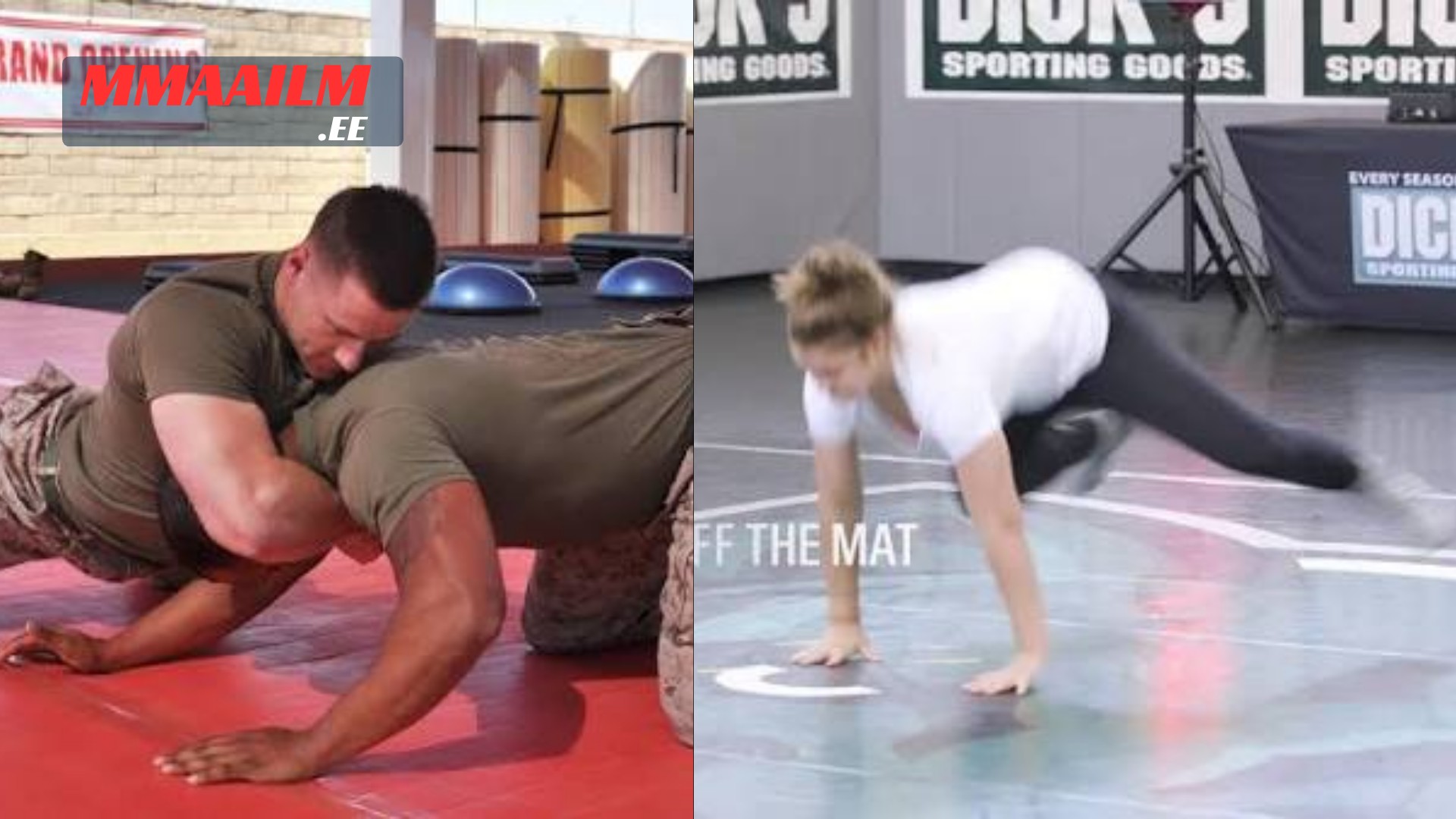
At its core, a successful sprawl relies on a sudden, violent shift in weight distribution. When an attacker shoots, they are attempting to get their hips underneath the defender’s center of gravity to generate lifting leverage. The sprawl counters this by violently removing the defender’s legs from the equation and driving the pelvis directly into the back of the attacker’s neck and shoulders.
The concept of “heavy hips” is pure physics. By throwing the legs backward and dropping the pelvis, the defending fighter forces the attacker to carry their entire upper body weight. To maximize this downward pressure, the defender must execute the “shoelaces down” technique. Instead of staying on the balls of the feet—which allows the attacker to grab the ankles and drive forward—the defender points their toes backward so the tops of their feet (the shoelaces) are flat against the mat. This eliminates any friction or posting ability for the defender’s legs, effectively turning their lower body into dead weight that the attacker cannot easily grip or drive through.
The MMA Sprawl vs. Traditional Wrestling
While the foundational mechanics of the sprawl originate in collegiate and freestyle wrestling, the realities of mixed martial arts require significant adaptations. In pure wrestling, a sprawl is designed to secure top control, score points, and avoid exposing the back to the mat. In MMA, the threat of strikes fundamentally changes how the position is navigated.
An MMA sprawl must account for knees, elbows, and upkicks. If a defender sprawls but leaves their head too low or their posture too relaxed, they risk being rolled or caught in a scramble where strikes can be landed. Conversely, the defending fighter can use the sprawl to inflict damage. By forcing the opponent to their knees and controlling their posture with a front headlock, the defender can open up devastating knees to the head and body, a dynamic that does not exist in traditional wrestling rule sets. The MMA sprawl is as much about creating space for strikes as it is about preventing the takedown.
Open-Mat Sprawling vs. Cage-Assisted Defense
Where a takedown attempt occurs in the octagon dictates exactly how a sprawl must be applied. In the center of the cage—the open mat—the traditional sprawling mechanics reign supreme. The defender has the space to shoot their legs backward, drop their hips, and circle away from the attacker’s driving force.
However, when a fighter is backed against the fence, a traditional backward sprawl becomes impossible; the cage physically blocks the legs from extending. In this scenario, fighters must rely on cage-assisted defense. Instead of sprawling backward, the defender widens their base, drops their center of gravity, and uses the fence to stay upright. They must dig underhooks, utilize the “wall walk” to regain their footing, and apply downward pressure on the attacker’s head. Attempting a traditional open-mat sprawl against the fence often results in the defender’s hips bouncing off the chain-link, inadvertently aiding the attacker in completing the takedown.
Fatal Postural Mistakes and Chain-Wrestling Vulnerabilities
Even a well-timed sprawl can fail if postural details are ignored, particularly against high-level chain wrestlers who string multiple takedown attempts together. One of the most common mistakes is leaving a leg dangling or failing to clear the hips entirely. If a defender sprawls but leaves one knee slightly bent or a foot hooked on the mat, a chain wrestler will immediately abandon the double-leg and pivot into a single-leg takedown, using the trapped limb to regain leverage.
Another fatal error is sprawling too high on the opponent’s back. If the defender’s chest is resting on the attacker’s mid-back rather than driving into the back of their neck and shoulders, the attacker retains the postural strength to keep driving forward. To kill a chain wrestler’s momentum, the defender must break the attacker’s posture by forcing their chin to their chest, severing the spinal alignment required to generate lifting power.
Turning Defense into Offense: Front Chokes and Back-Takes
A successful sprawl does more than just stop a takedown; it creates a highly advantageous offensive position. When an attacker is flattened out underneath heavy hips, their neck and back are inherently exposed. For an opportunistic grappler, the sprawl is the perfect entry point for fight-ending submissions.
The front headlock series is the most direct attacking route from a sprawl. By wrapping the opponent’s neck and securing an arm, the defending fighter can lock in Guillotine, D’Arce, or Anaconda chokes. If the opponent defends the neck by tucking their chin, the defender can use the sprawl to transition to the back. By keeping their weight heavy and circling toward the opponent’s hips, the defender can secure hooks and establish back control. In this way, the sprawl transcends basic defense, serving as a critical pivot point where a fighter can instantly turn their opponent’s aggression into a fight-ending trap.