In mixed martial arts, raw power and blinding speed are highly visible attributes, but the true determining factor of a fight is often entirely invisible to the untrained eye. That factor is distance management. The ability to control the physical space between yourself and your opponent dictates who can land strikes, who can initiate grappling exchanges, and who controls the pace of the bout. Mastering distance is the foundational skill of MMA, serving as the canvas upon which all other techniques are painted.
The Three Distinct Ranges of Mixed Martial Arts
To understand distance management, one must first define the distinct ranges of combat. In MMA, these are generally categorized into kicking range, boxing range (often called “the pocket”), and clinch or grappling range.
Kicking range is the furthest distance where strikes can land. Here, fighters are relatively safe from punches but can exchange roundhouses, teeps, and calf kicks. Boxing range is one step closer, where punches, elbows, and knees become the primary weapons. This is the most volatile space in a fight, requiring constant head movement and defensive awareness.
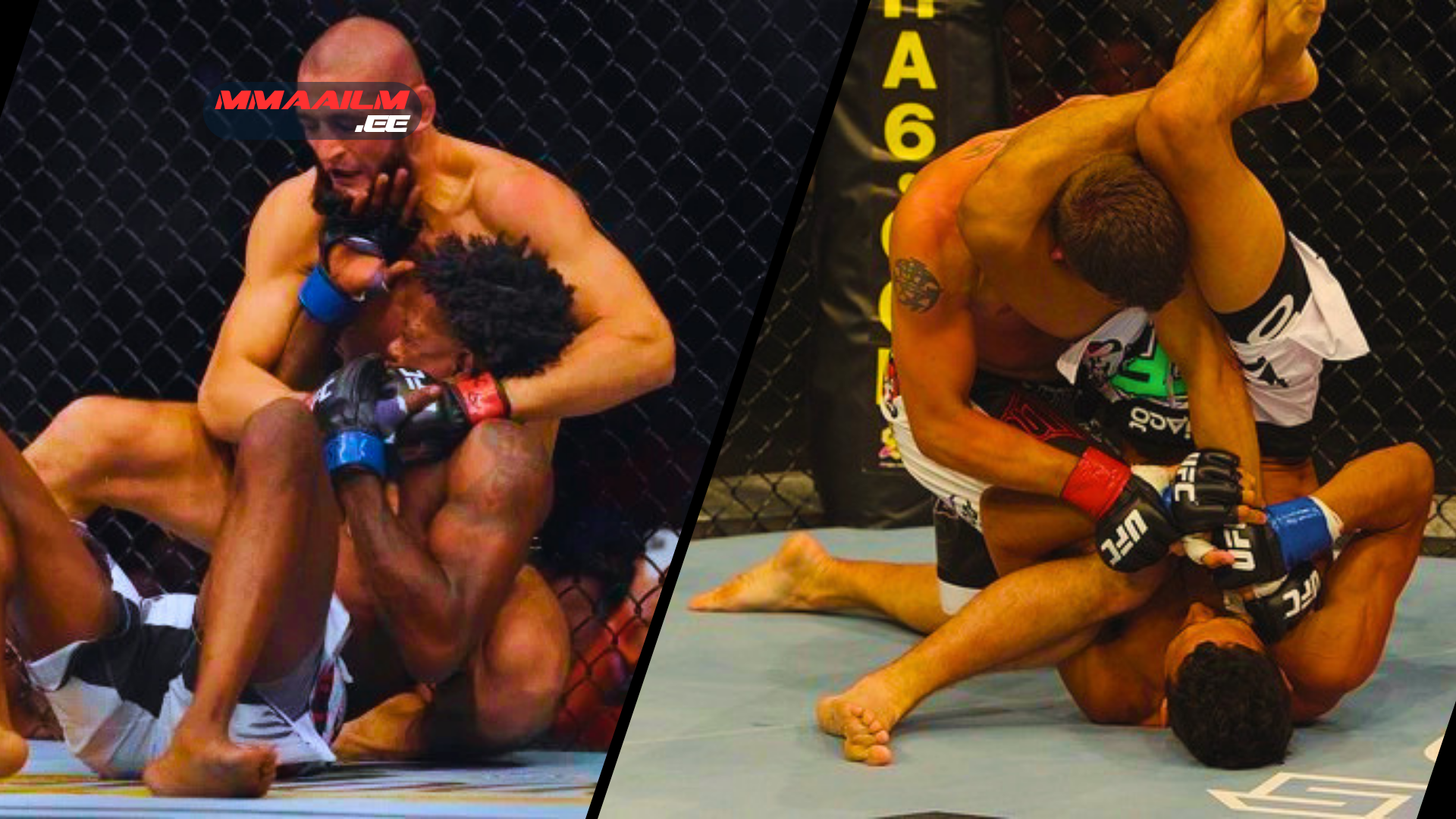
Finally, clinch and grappling range is where physical connection is made, leading to dirty boxing, takedowns, and submission attempts. What makes MMA unique is how the constant threat of the takedown alters these distances. In pure striking sports, fighters can comfortably sit in boxing range for extended periods. In MMA, lingering in the pocket invites level changes and double-leg takedowns, forcing fighters to maintain a slightly longer default distance than a traditional boxer or kickboxer would.
Range Finding: The Probes and Measuring Sticks
Before a fighter can launch a devastating combination or shoot for a takedown, they must first establish their range. This is achieved through “range finding,” a continuous process of probing and measuring the opponent to gather spatial data.
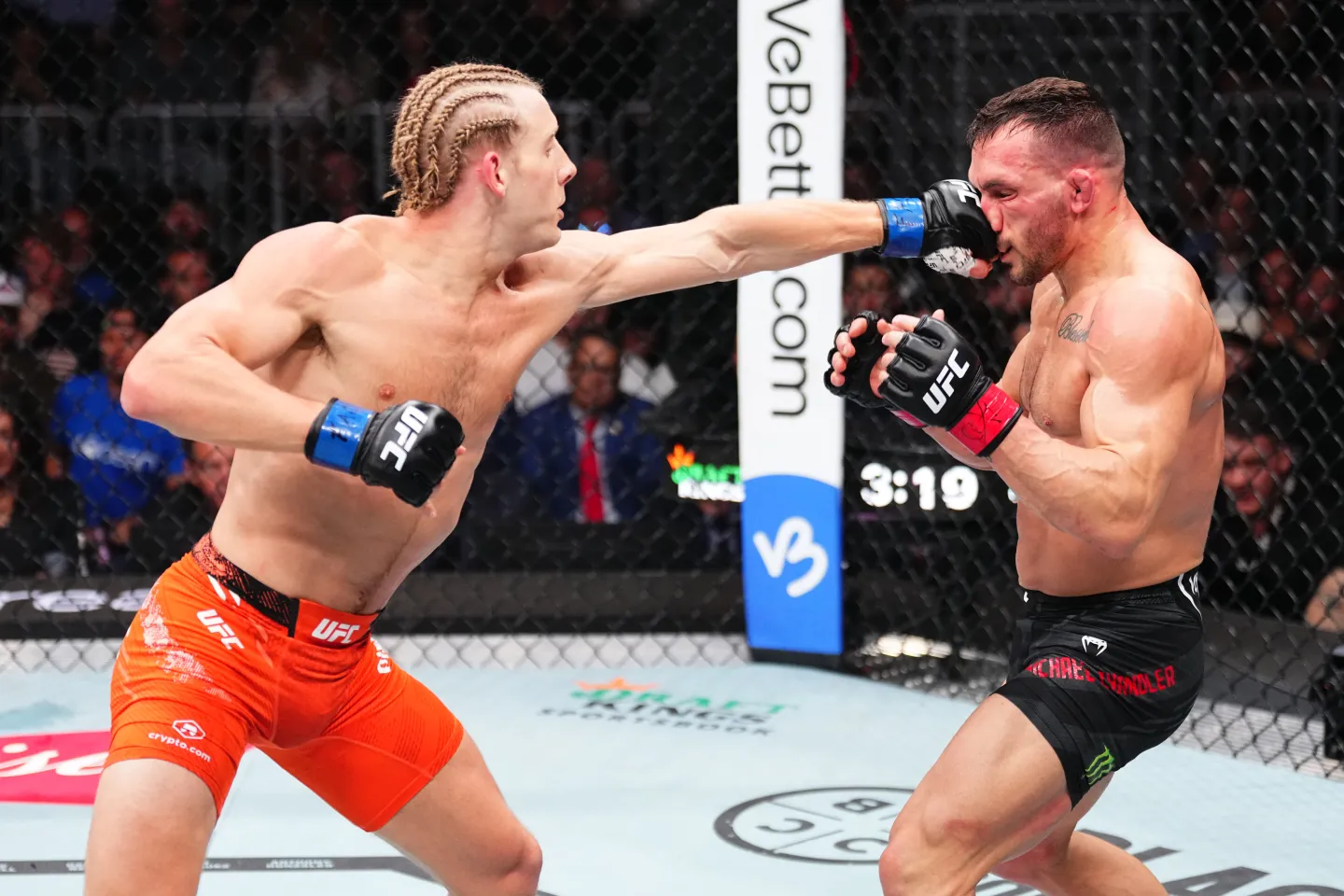
The lead hand is the most common tool for this task. Fighters will frequently extend their lead hand to post on an opponent’s guard, obscure their vision, or simply measure the exact millimeter required to land a rear-hand cross. Jabs serve a similar purpose, acting as a physical ruler that also disrupts the opponent’s forward pressure.
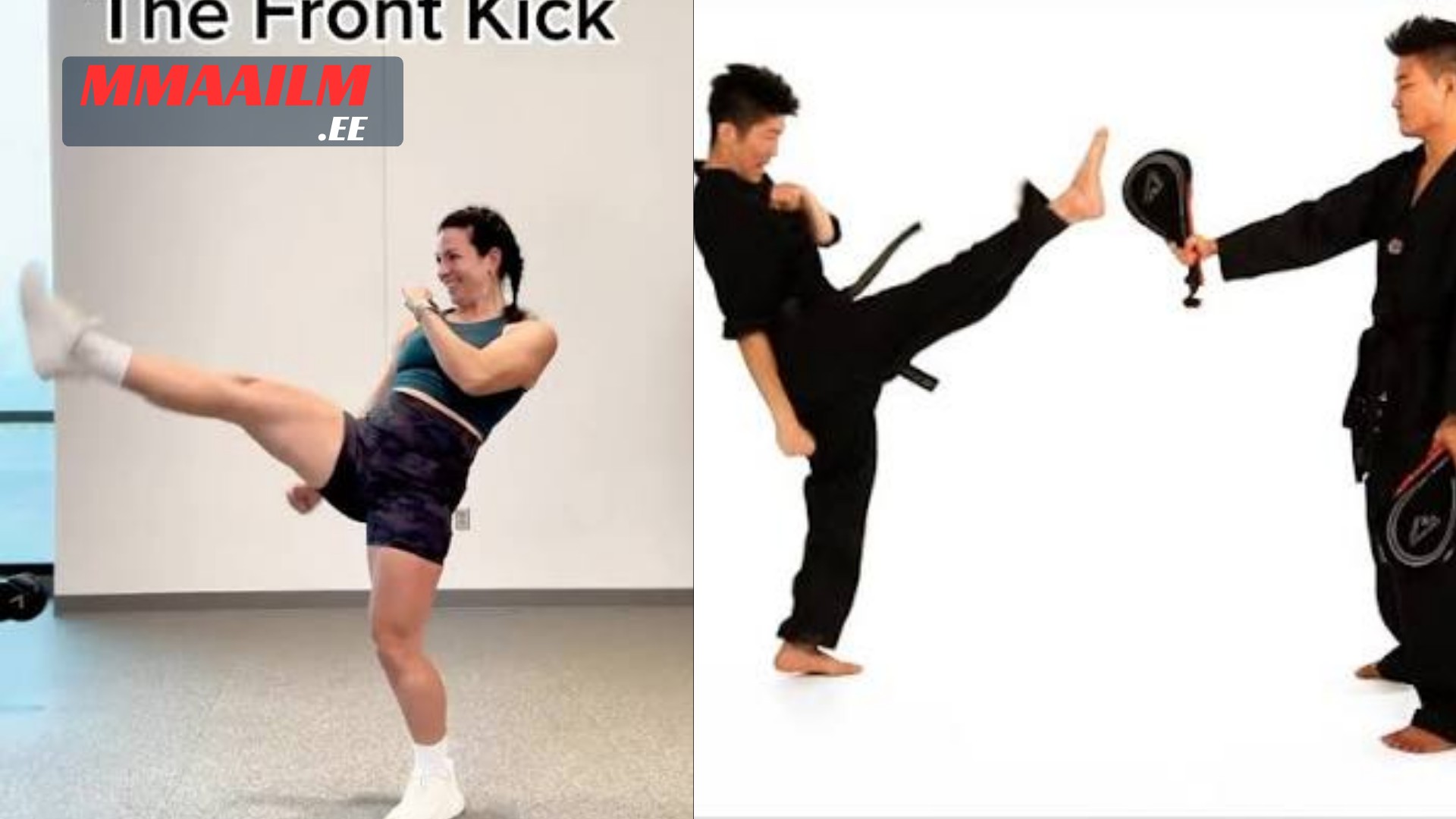
Lower body tools are equally vital for maintaining the outer boundaries of a fight. Linear kicks, such as the push kick (teep) to the midsection or the oblique kick to the thigh, are exceptional range-finders. They allow a fighter to strike from a safe distance while physically pushing the opponent back, instantly resetting the space to a comfortable kicking range.
Navigating the “Red Zone”
Between the safety of the outside kicking range and the offensive potential of the pocket lies the “Red Zone.” This is the dangerous intermediate space where a fighter is close enough to be hit by an opponent’s strikes, but not quite close enough to land their own or secure a grappling hold.
Crossing the Red Zone is one of the most perilous actions in MMA. Consider a classic archetypal matchup: a shorter, explosive grappling specialist facing a rangy, outside kickboxer. The grappler cannot simply walk forward in a straight line, or they will absorb heavy damage while traversing this intermediate space.
To bridge this gap safely, fighters rely on explosive biomechanics and precise footwork. The pendulum step—a rapid, bouncing movement that allows a fighter to dart in and out of range—is highly effective for blitzing through the Red Zone. Alternatively, fighters use lateral movement and level changes to slip past the opponent’s longest weapons, crossing the space on an angle rather than a predictable straight line.
Defensive Framing and Spatial Control
When an opponent successfully crosses the Red Zone and initiates pressure, a fighter must have mechanisms to defend their personal space. This is where defensive framing becomes crucial. Rather than just covering up with a high guard and absorbing strikes, elite fighters use their skeletal structure to build physical barriers.
A stiff-arm or a long guard involves extending the arms to frame against the opponent’s shoulders, biceps, or collarbones. Because bone is structurally stronger than muscle, a properly placed frame can completely halt an opponent’s forward momentum, regardless of their physical strength.
In closer quarters, the collar tie—gripping the back of the opponent’s neck—serves as a powerful frame. By controlling the head and maintaining a strong posture, a fighter can block takedown entries, smother inside strikes, and create the necessary leverage to safely retreat and reset the distance back to their preferred range.
Manipulating Distance for Counters and Transitions
At the highest levels of MMA, distance management evolves from a defensive necessity into a potent offensive weapon. Elite fighters manipulate space to deceive their opponents, setting traps through half-steps, pull-counters, and false retreats.
A false retreat involves taking a deliberate step backward to convince the opponent that they have the space to attack. As the opponent lunges forward, overextending their posture into the Red Zone, the retreating fighter abruptly plants their feet and fires a counter-strike into the oncoming momentum.
Similarly, manipulating distance is the key to blending striking and grappling. A fighter might crowd the opponent, stepping deep into the pocket to draw out a wide hook. Instead of trading punches, they use that slight shift in distance to duck under the strike, perfectly positioned for a seamless takedown entry. By mastering the exact measurements of the cage, a fighter ensures that every incoming strike misses by an inch, and every counter-attack lands flush.