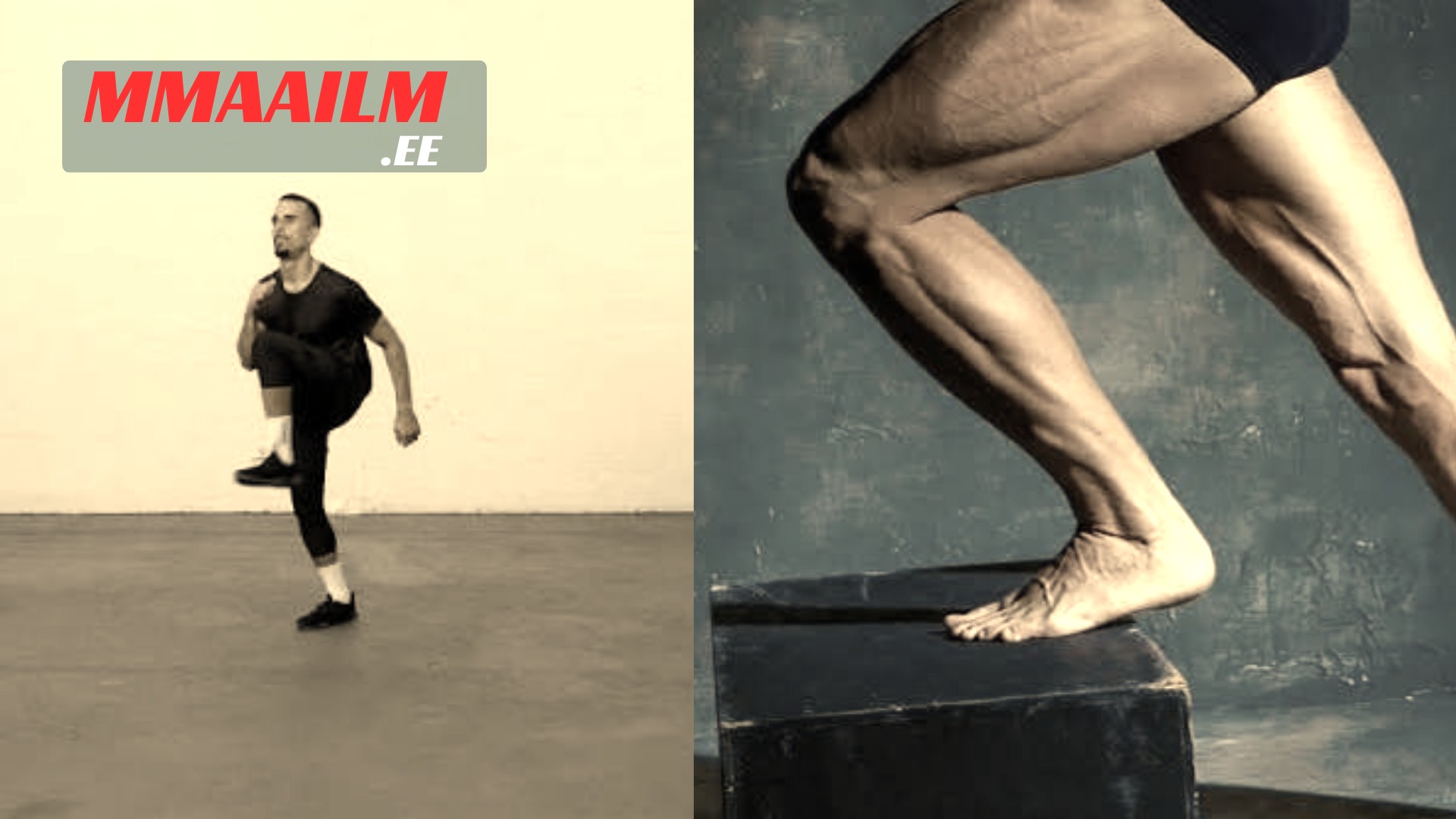
Few techniques in mixed martial arts evoke as visceral a reaction from fans, fighters, and pundits as the oblique kick. Often referred to colloquially as a knee stomp, this linear leg strike has fundamentally altered how fighters manage distance and approach forward pressure in the cage. While striking the legs has always been a foundational element of MMA, the oblique kick targets the lower extremities with a unique mechanical trajectory designed to stop an opponent dead in their tracks.
As the sport has evolved, so too has the sophistication of its striking techniques. The oblique kick represents a highly calculated, highly effective tool for neutralizing aggressive strikers. However, its undeniable efficiency is matched only by the intense controversy surrounding its safety. To understand the oblique kick is to understand the delicate balance between tactical brilliance and the brutal realities of professional combat sports.
Biomechanics: The Oblique Kick vs. The Traditional Teep
To appreciate the oblique kick, one must first understand its unique biomechanics, particularly how it differs from a traditional Muay Thai push kick, or “teep.” A standard teep is typically thrown with a horizontal or slightly upward trajectory, using the ball of the foot or the heel to strike the opponent’s midsection or upper thigh. Its primary purpose is to push the opponent backward, creating space and disrupting their balance.
The oblique kick, by contrast, is thrown with a distinct downward trajectory. The attacking fighter lifts their knee and drives the heel or the flat of their foot directly into the opponent’s lower thigh, just above the kneecap. The foot is often turned outward at an oblique angle—hence the name—allowing the striker to slip past the opponent’s guard and land flush on the narrow target of the leg.
Rather than pushing the opponent’s center of mass backward, the oblique kick drives the opponent’s lead leg backward and downward. It is a stomping motion executed on a horizontal plane, utilizing the rigid structure of the attacker’s leg to transfer maximum kinetic energy directly into the opponent’s skeletal frame.
Tactical Application and Distance Management
In the modern MMA meta, the oblique kick functions much like a long-range jab for the lower body. It is an exceptional tool for distance management, allowing a fighter to maintain kicking range while severely punishing anyone who attempts to close the gap.
The strike is particularly effective at neutralizing heavy-handed, aggressive boxers. When a fighter steps forward to throw a punch, they must transfer their body weight onto their lead leg to generate power. By timing the oblique kick to land at the exact moment the opponent steps in, the kicker exploits this weight transfer. The strike abruptly halts the opponent’s forward momentum, completely smothering their punching range before they can even initiate their combination.
Furthermore, the oblique kick requires very little energy to throw and leaves the attacker in a relatively safe, balanced position. Because it targets the lowest available extremity, the kicker’s head remains far out of range of counter-punches, making it a low-risk, high-reward technique for controlling the geography of the Octagon.
The Physiological Impact on the Knee Joint
The controversy surrounding the oblique kick stems directly from its physiological impact. The human knee is a hinge joint designed to bend in only one direction. When a fighter’s weight is planted firmly on their lead leg, the joint is locked and bearing the brunt of their body mass.
When an oblique kick lands forcefully just above a planted, weight-bearing knee, it forces the joint backward into hyperextension. Because the foot is gripped to the canvas, the kinetic energy of the strike has nowhere to dissipate. The force is instead absorbed entirely by the soft tissues of the knee, specifically the anterior cruciate ligament (ACL), the posterior cruciate ligament (PCL), and the meniscus.
Even when it does not cause an immediate structural tear, the repeated hyperextension of the knee joint causes severe pain, swelling, and a rapid degradation of the opponent’s mobility. A fighter who has absorbed multiple oblique kicks will find it incredibly difficult to push off their lead leg, robbing them of both their punching power and their ability to shoot for takedowns.
The Ethical Debate: A Legitimate Strike or a Dangerous Foul?
The devastating nature of the oblique kick has sparked an ongoing, highly polarizing debate within the MMA community regarding its legality. Critics of the technique argue that it crosses the line from competitive combat to unnecessary mutilation. Because the strike specifically targets a vulnerable joint in a way that can cause catastrophic, career-altering injuries, many fighters and coaches have lobbied for it to be classified as a foul, akin to 12-to-6 elbows or strikes to the back of the head.
Conversely, proponents of the oblique kick argue that MMA is an inherently dangerous sport where the objective is to inflict damage. They point out that joint locks, such as heel hooks and kneebars, are entirely legal and carry similar risks of ligament destruction. Furthermore, advocates note that head kicks and knockout punches cause traumatic brain injury, which is arguably far more dangerous than a damaged knee.
From a purely analytical standpoint, the debate highlights the friction between fighter safety and martial arts realism. Until regulatory bodies reach a consensus to ban the strike, it remains a legal, highly effective weapon that fighters must learn to navigate.
Defending and Countering the Linear Leg Strike
Because the oblique kick is so difficult to deal with, defending it requires specific tactical adjustments. The most reliable defense is stance modification. Fighters who utilize a heavy, boxing-centric stance with a planted lead foot are highly susceptible to the strike. Transitioning to a lighter, more traditional Muay Thai stance—where the lead leg is light and tapping the canvas—allows the fighter to quickly lift their leg and absorb the strike or pull the leg out of range entirely.
Another defensive tactic is to keep the lead knee slightly bent and turned slightly outward. A bent knee acts as a shock absorber, preventing the joint from being forced into hyperextension when the strike lands.
Countering the oblique kick requires exceptional timing and bravery. Because the kicker must momentarily stand on one leg to execute the stomp, their mobility is temporarily compromised. Aggressive fighters can attempt to slip past the kicking leg, stepping off the center line and firing a straight cross or an overhand right over the top of the kick. While risky, closing the distance rapidly during the kicking motion can turn the opponent’s defensive weapon into a critical vulnerability.