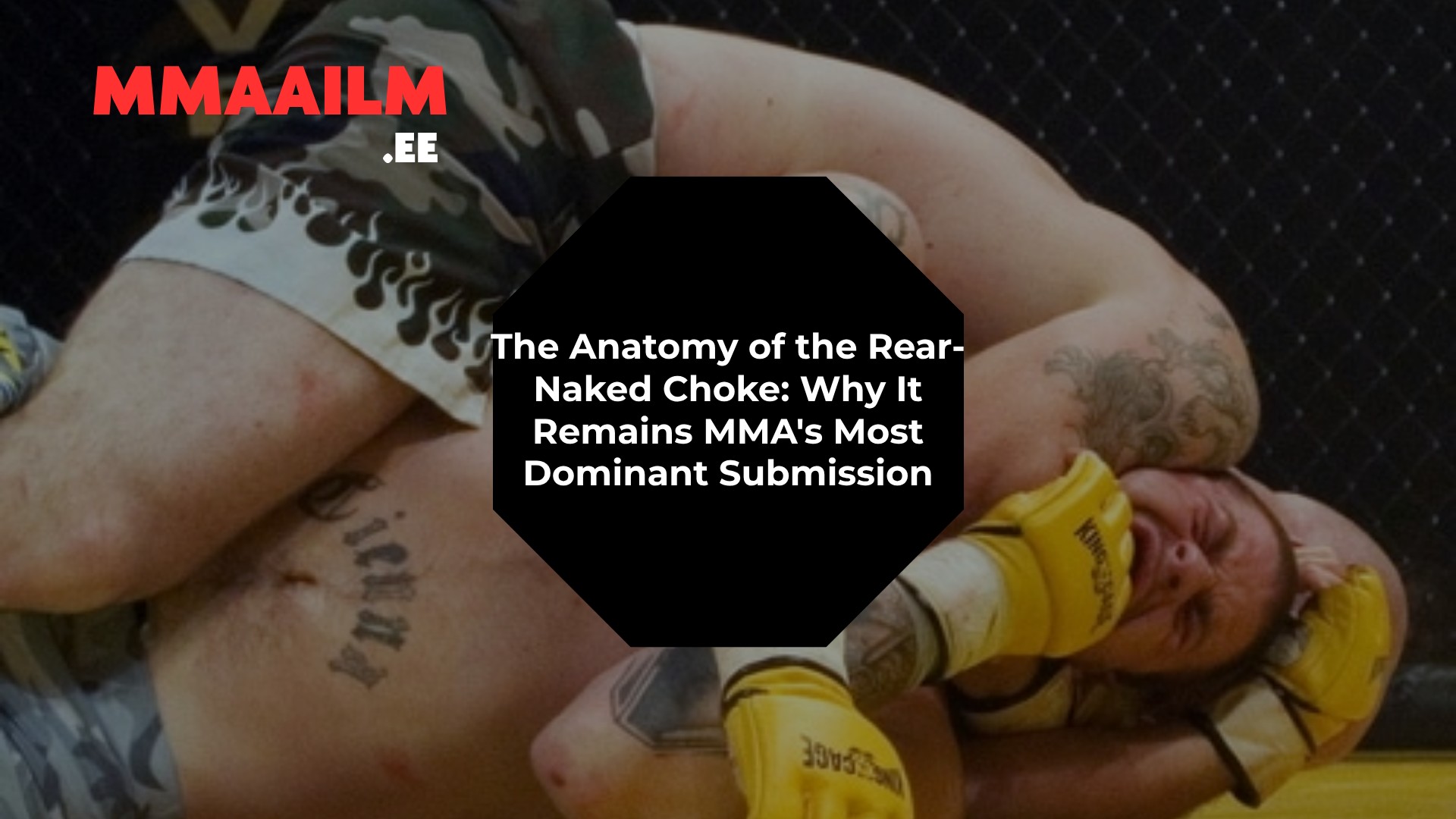
In the unpredictable theater of Mixed Martial Arts, where a single punch can alter the course of a career, one technique stands above the rest as the ultimate equalizer: the rear-naked choke (RNC). When a fighter secures their opponent’s back and slides an arm under the chin, the fight is usually over. It is a submission that transcends weight classes, base styles, and eras, remaining as effective today as it was in the sport’s infancy.
The rear-naked choke is not just a fan-favorite finish; it is a biomechanical masterpiece. By combining the safest attacking position in grappling with a structurally flawless grip, the RNC neutralizes an opponent’s ability to fight back. Understanding why this submission remains the gold standard requires a deep dive into its leverage, its technical variations, and the physiological reasons it forces even the toughest fighters to tap or go to sleep.
The Statistical King of MMA Submissions
The numbers behind the rear-naked choke are staggering. Across publicly available UFC databases, the RNC accounts for approximately 37% to 43% of all recorded submission finishes in the promotion’s history. It vastly outperforms other common submissions like the guillotine choke, the armbar, and the triangle choke.
This statistical dominance is directly tied to positional hierarchy. The RNC is launched from back control, universally recognized as the most advantageous position in grappling. Because the attacker is positioned behind their opponent, they are safely out of range of damaging strikes. From this vantage point, a fighter can patiently hand-fight, break down defenses, and repeatedly attempt the submission without risking a knockout or losing their dominant position. If an armbar fails, the attacker often ends up on their back; if a rear-naked choke fails, the attacker is usually still on the opponent’s back, ready to try again.
The Anatomy of the Strangle: Blood vs. Air
A common misconception among casual observers is that the rear-naked choke crushes the windpipe and stops the opponent from breathing. While a poorly applied choke can certainly cause intense discomfort to the trachea, a technically sound RNC is a blood choke, or strangle, rather than an air choke.
The technique targets the carotid arteries located on both sides of the neck. When the attacker’s arm wraps around the throat, the bicep compresses one artery while the forearm compresses the other. By restricting the flow of oxygenated blood to the brain, the choke induces rapid unconsciousness. Sports medicine research indicates that when applied correctly and fully locked, a blood choke takes an average of just 8.9 seconds to render an opponent unconscious. This rapid physiological impact is why fighters are heavily incentivized to tap the moment the grip is secured.
The Traditional Figure-Four Grip
The textbook application of the rear-naked choke relies on the “figure-four” grip, a configuration that maximizes leverage and makes the hold incredibly difficult to break. The mechanics of this classic variation involve several precise steps:
- The Deep Hook: The attacker slides their choking arm under the opponent’s chin, ensuring the crook of the elbow aligns directly with the center of the throat. This protects the trachea while placing the bicep and forearm squarely on the carotid arteries.
- The Bicep Grip: The hand of the choking arm grips the attacker’s own opposite bicep.
- The Lock: The non-choking hand is then slid behind the opponent’s head or upper neck, locking the arms into a rigid “figure-four” structure.
- The Finish: Rather than just squeezing the arms, the attacker expands their chest, drives their hips forward, and pulls their elbows together, creating an inescapable vice.
A famous execution of this textbook technique occurred at UFC 196, when Nate Diaz hurt Conor McGregor with strikes, forced a takedown, secured back mount, and applied a flawless figure-four rear-naked choke to secure the upset victory.
The Short Choke (Gable Grip) Variation
While the figure-four is the traditional standard, modern MMA and submission grappling have seen a rise in the “short choke.” Popularized by grappling legends like Marcelo Garcia, the short choke is utilized when an opponent is aggressively defending their neck or when the bulk of MMA gloves makes it difficult to thread the non-choking hand behind the head.
Instead of reaching for the bicep, the attacker connects their hands in a palm-to-palm “gable grip” directly in front of the opponent’s shoulder. The attacker then drives the rigid radius bone of their forearm directly across the neck. While it lacks the locking mechanism of the figure-four, the short choke requires less space to execute and can be applied with devastating speed during chaotic scrambles.
The Mandible Crush: Choking Through the Chin
One of the most persistent myths in MMA is that simply tucking the chin to the chest makes a fighter immune to the rear-naked choke. In reality, tucking the chin is merely a temporary stalling tactic. High-level grapplers view a tucked chin not as an impenetrable defense, but as a minor obstacle.
If a defender refuses to lift their chin, the attacker will often lock the figure-four grip directly over the jaw or face. This is perfectly legal in MMA and submission grappling. The immense pressure generated by the choke acts as a severe neck crank and jaw compression. The defender is then faced with a brutal choice: endure the agonizing pain—which can result in damaged teeth or a dislocated jaw—or lift their chin to relieve the pressure, thereby exposing the neck for a clean strangle. Many fighters simply tap to the pain of the mandible crush before the choke even reaches the arteries.
Defensive Concepts and the “Straight Jacket” System
Defending the rear-naked choke requires immediate, preventative action. Once the arms are fully locked, escape is highly improbable. The primary defense is “hand-fighting.” The defender must establish a two-on-one grip, using both of their hands to control the attacker’s choking arm and peel it away from the neck. Simultaneously, the defender must attempt to clear the attacker’s leg hooks, slide their hips down to the mat, and turn their shoulders into the attacker’s guard to escape the back position entirely.
To counter this defense, elite attackers utilize the “straight jacket” system. Instead of fighting a losing battle against a two-on-one grip, the attacker uses their own legs to trap the defender’s arms. By crossing their feet over the defender’s wrists, the attacker removes the defender’s ability to hand-fight, leaving the neck completely exposed for a methodical, uncontested choke.
Why Brute Strength Fails Against the RNC
In some grappling scenarios, a significant strength advantage might allow a fighter to muscle out of a joint lock or power out of a bad position. The rear-naked choke does not afford this luxury. The RNC is a triumph of structural leverage over brute force.
Once the figure-four is secured, the attacker’s entire upper body—back, chest, and arms—is engaged against the isolated neck of the defender. Because the choke restricts blood flow rather than air, adrenaline and physical strength cannot delay the onset of unconsciousness. The structural integrity of the locked arms means that pulling at the attacker’s wrists is futile. In the architecture of MMA submissions, the rear-naked choke remains the ultimate checkmate, proving time and again that perfect technique will always conquer raw power.