In the realm of combat sports, the jab is universally recognized as the most fundamental and essential strike. In traditional boxing, it acts as a piston—a stiff, commanding punch used to dictate range, snap an opponent’s head back, and set up devastating combinations. However, when this textbook technique is transplanted directly into the cage, it often becomes a massive liability. The unique environment of mixed martial arts has forced the traditional boxing jab to undergo a radical biomechanical and tactical evolution.
To understand striking in the Octagon, one must understand why the classic boxing jab fails under MMA rules. The constant threats of wrestling and lower-body strikes completely alter the geometry of a fight. As a result, mixed martial artists have modified how they step, how they distribute their weight, and how they retract their lead hand, turning the MMA jab into a highly specialized tool for distance management and survival.
The Stance and Weight Dilemma
A traditional boxing jab relies heavily on stance and weight transfer. Boxers typically adopt a bladed stance, turning their lead shoulder toward the opponent to minimize their target area. To generate a stiff, damaging jab, a boxer steps in and shifts a significant portion of their body weight onto the lead foot. In a boxing ring, this is structurally sound. In an MMA cage, it is an invitation for disaster.
A heavy, bladed lead leg is highly vulnerable to calf kicks and inside leg kicks. If a fighter’s weight is fully committed to the front leg while throwing a jab, they cannot lift their foot to check an incoming low kick, leaving the peroneal nerve completely exposed. Furthermore, this forward weight distribution makes it nearly impossible to defend a fast single-leg takedown. If a wrestler times the jab and shoots, the striker cannot quickly retract their lead leg to sprawl.
Consequently, the MMA jab must be thrown from a squarer, more balanced stance. Fighters learn to flick the jab while keeping their weight centered or slightly biased toward the rear foot. This sacrifices some of the concussive power found in boxing, but it allows the fighter to instantly lift the lead leg to check a kick or drive their hips backward to defend a takedown.
Glove Size Dynamics and Defensive Liabilities
The equipment used in MMA fundamentally changes the risk-to-reward ratio of extending the lead hand. In boxing, 16-ounce gloves act as portable shields. A boxer can throw a committed jab and safely tuck their chin behind the massive leather pillow of their own extended shoulder and glove. If the opponent fires a counter cross or overhand, the sheer size of the boxing glove provides a substantial defensive barrier.
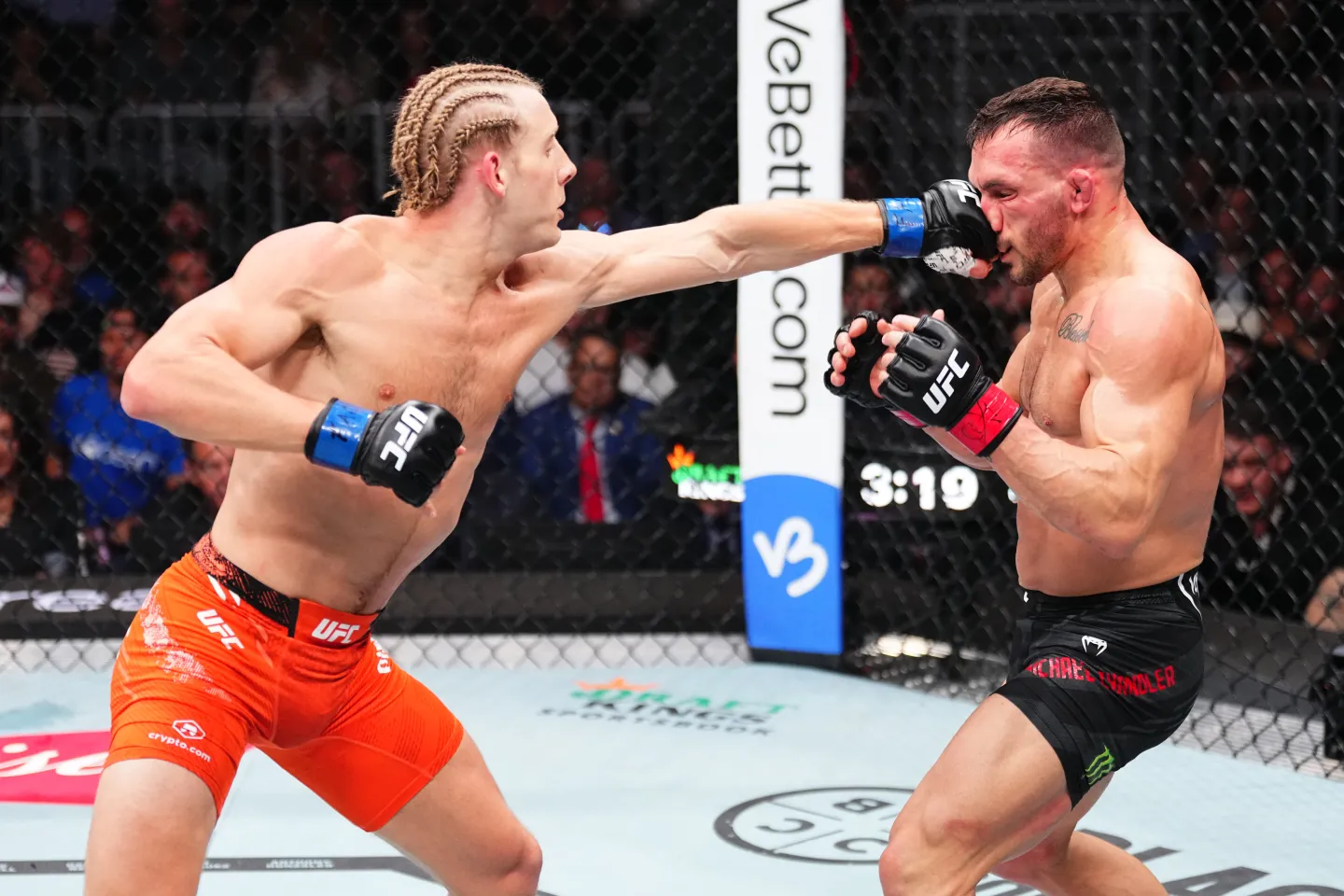
Four-ounce MMA gloves offer no such luxury. When a mixed martial artist extends their lead arm for a jab, they are leaving a clear, unobstructed path to their chin. The smaller gloves easily slip through traditional guards, making the act of jabbing inherently riskier. Because fighters cannot hide behind their gloves, the defensive responsibility of the MMA jab shifts entirely to head movement, spatial awareness, and rapid hand retraction.
This dynamic forces MMA fighters to prioritize speed and recovery over power when jabbing. The punch must be thrown and retracted in a fraction of a second, often accompanied by a slight slip off the center line, ensuring the fighter does not eat a counter right hand over the top of their extended arm.
The Pawing and Measuring Jab
Because stepping in heavily with a stiff jab carries so much risk, the “pawing” jab has become a staple of high-level MMA striking. Rather than a concussive blow, this variation utilizes an active, non-committal lead hand. The fighter extends their arm lightly, often leaving it out for a split second longer than a traditional punch, to gauge distance and track the opponent’s movement.
This measuring tool serves multiple tactical purposes. First, it blinds the opponent, obstructing their vision and making it difficult for them to read incoming attacks. Second, it baits reactions. By pawing at the opponent’s guard, a fighter can draw out counter-strikes or premature level changes, gathering valuable data on how the opponent reacts to pressure.
Most importantly, the pawing jab allows a fighter to dictate the pace of the bout without shifting their body weight onto the front leg. It establishes the outer boundary of the striking range, creating a physical buffer that the opponent must navigate before they can launch their own offense.
The Double Jab in Open Space
The physical dimensions of the Octagon present another unique challenge. A standard boxing ring is relatively small, making it easy to trap an opponent in a corner using a single, stepping jab. The MMA cage is vast, offering far more open space for lateral movement and backward retreats. A single jab is rarely enough to bridge the gap against an evasive opponent.
To safely close this immense distance, MMA fighters rely heavily on the double jab. By throwing multiple, lighter jabs in rapid succession, a fighter can glide across the canvas without over-committing their momentum on a single step. The first jab serves to blind the opponent and force them backward, while the second jab closes the remaining distance to set up a power hand or a clinch entry.
If the opponent decides to shoot for a takedown or throw a heavy counter during the first jab, the fighter’s momentum is still manageable. Because they haven’t lunged forward with all their weight, they retain the balance necessary to abort the second jab and transition immediately into defensive grappling or evasive footwork.
The Jab as an Anti-Grappling Weapon
While the jab is primarily viewed as a striking tool, in MMA, it doubles as a critical first line of takedown defense. Grapplers rely on timing and rhythm to secure takedowns, often waiting for a striker to plant their feet or over-commit to a power punch before changing levels. A well-educated MMA jab disrupts this rhythm entirely.
Fighters facing heavy grappling threats often utilize a quick, upward-flicking jab. Instead of aiming squarely for the nose, this jab is thrown with a slight upward trajectory to catch the opponent as they attempt to duck under the striking line. If an opponent drops their hips to initiate a double-leg takedown, the upward jab intercepts their face, snapping their head back.
In wrestling, posture is everything. If a wrestler’s head is snapped backward during a level change, their spine comes out of alignment, instantly killing the forward drive required to complete the takedown. By using the jab to proactively stuff level changes before they fully materialize, a mixed martial artist transforms a simple punch into an indispensable anti-grappling shield.