When a fight ends in a spectacular knockout or a slick submission, the highlight reel focuses on the final blow or the tap. But for the fighters in the cage, the sequence that ended the bout began seconds, or even minutes, earlier in a subtle, often overlooked arena: the battle for grip control. Hand-fighting is the invisible war of mixed martial arts. It is a constant, high-stakes micro-skill that dictates distance, neutralizes offense, and paves the way for fight-ending sequences. While casual observers track the shoulders and hips looking for power strikes, astute analysts watch the hands.
The Stand-Up Game: Trapping, Framing, and Disrupting Rhythm
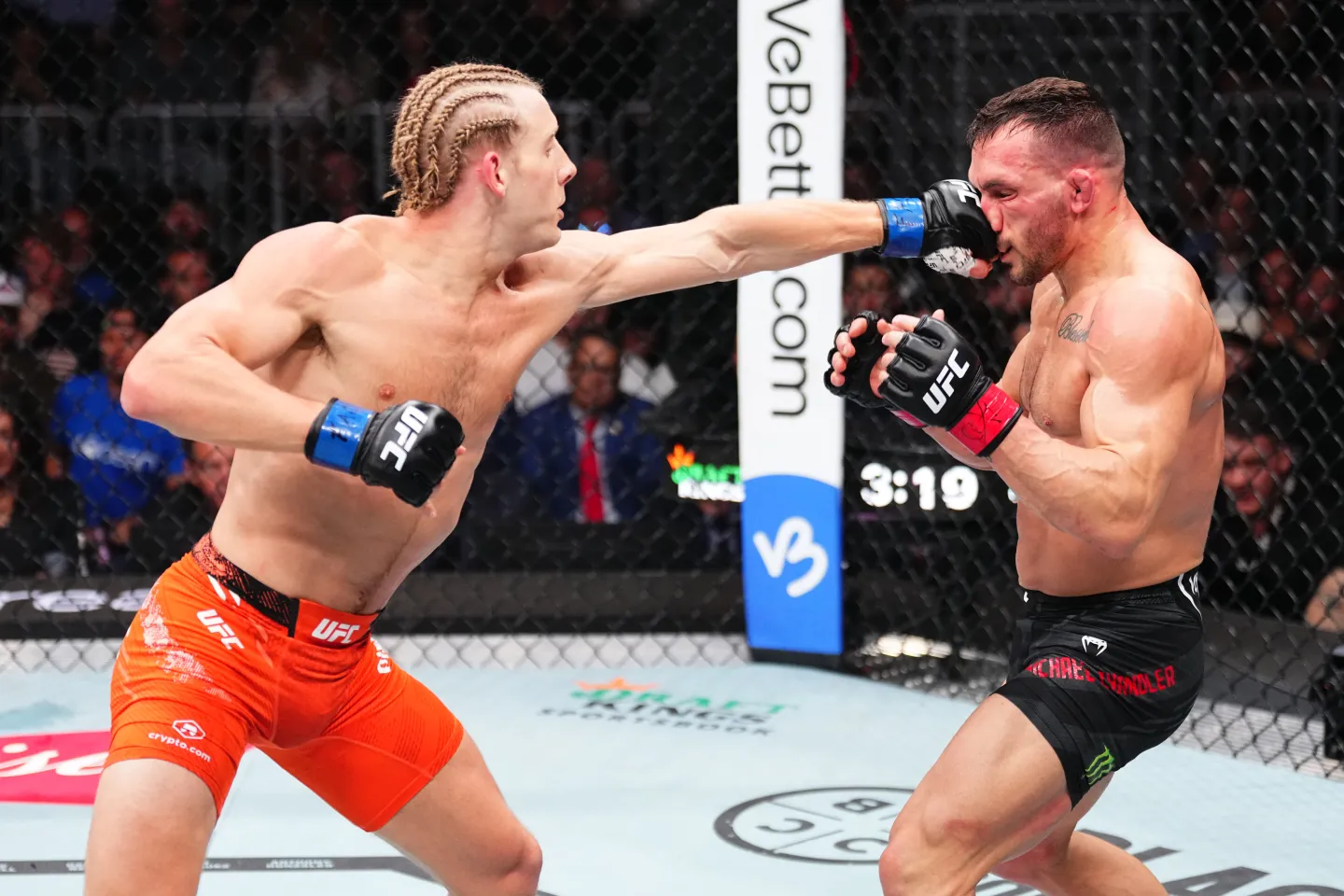
In the stand-up realm, hand-fighting is about rhythm disruption and creating openings. Strikers use their lead hands not just to jab, but to paw, parry, and measure. By actively engaging an opponent’s lead hand, a fighter can stifle their offense before it begins, forcing them to constantly reset their guard.
Hand-trapping is a masterclass in exploiting these micro-engagements. By pinning an opponent’s glove to their chest or pulling their guard down for a split second, a striker clears a direct path for a power cross or hook. Additionally, framing with an extended arm serves a dual purpose: it acts as a physical barrier to maintain a safe distance and obstructs the opponent’s line of sight, effectively blinding them to incoming strikes or level changes.
The Clinch Transition: Winning the Inside Space
As the distance closes, the striking phase melts into the clinch, and hand-fighting becomes a matter of structural dominance. The fighter who controls the inside space dictates the terms of the engagement. Bicep ties and wrist control are essential tools in this phase. By clamping down on an opponent’s biceps or securing their wrists, a fighter can neutralize incoming elbows and short punches.
A strong collar tie—controlling the back of the neck or head—breaks the opponent’s posture, making them carry dead weight and disrupting their balance. This grip superiority is exactly what allows a wrestler to secure a takedown against the cage, or a striker to create the necessary leverage and space for devastating dirty boxing. Without winning the hand-fight first, entering the clinch is a dangerous gamble.
Ground Grappling: The Anatomy of a Finish
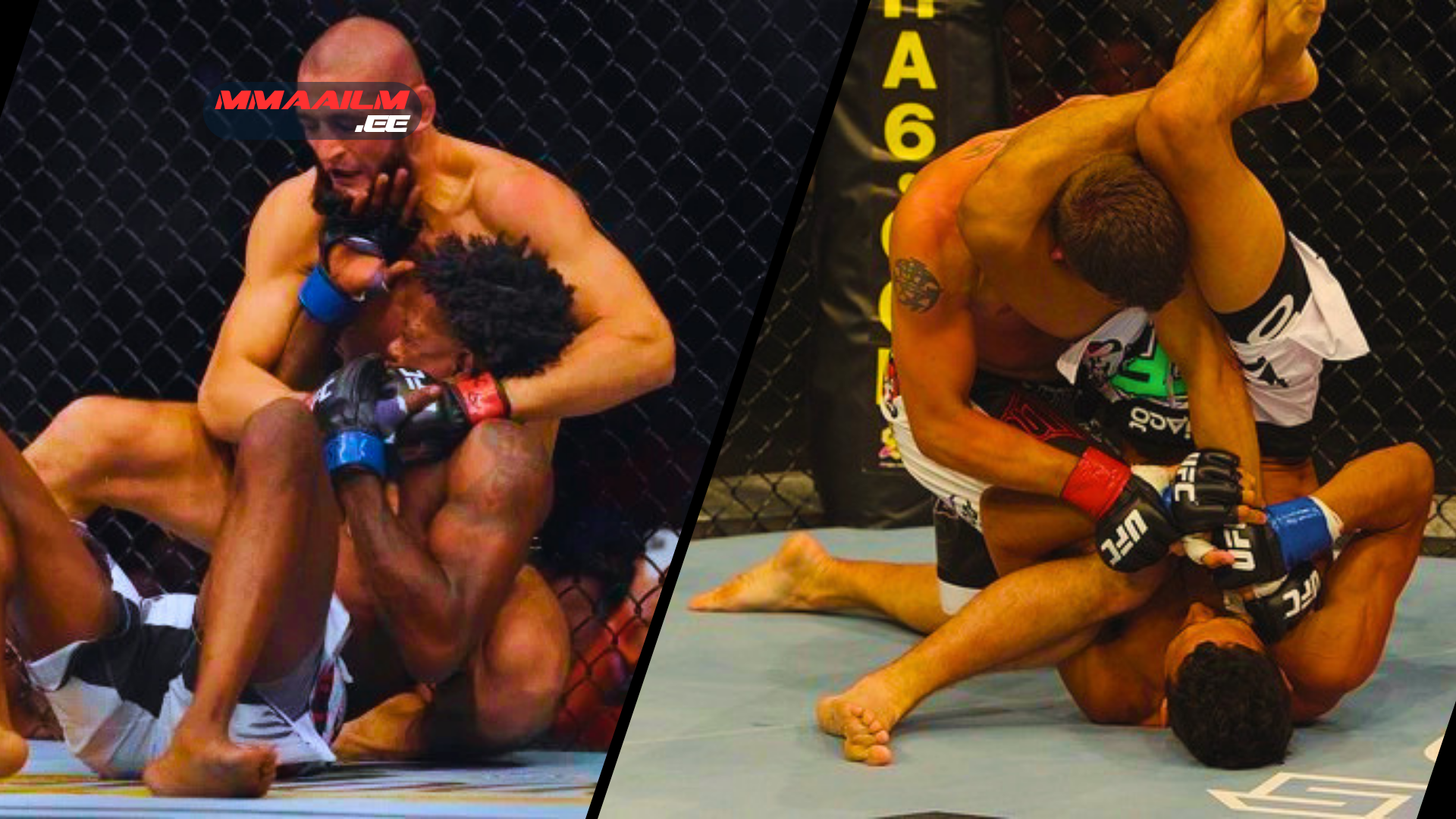
Once the fight hits the mat, the grip battle intensifies. Every submission, sweep, and positional escape is predicated on winning the hand-fight. A fighter cannot simply rip an armbar or lock in a kimura without first isolating the limb and systematically stripping away the defender’s grips.
The two-on-one grip—using two hands to control a single wrist or forearm—is a foundational grappling mechanic that provides the asymmetrical leverage needed to break a defensive posture. Furthermore, hand-fighting is the secret to brutal ground-and-pound. By pinning an opponent’s wrist to the canvas, a top-position fighter removes the defender’s primary ability to block, creating a window for uncontested strikes that often force a referee stoppage.
The Glove Factor: How MMA Equipment Changes the Game
The unique design of open-fingered MMA gloves fundamentally alters the mechanics of hand-fighting, distinguishing the sport from both pure boxing and pure submission grappling. Unlike heavily padded boxing gloves, MMA gloves do not allow a fighter to simply shell up behind a high guard; punches can easily slip through the gaps. However, the exposed fingers allow for grabbing, parrying, and trapping in ways a traditional boxer cannot execute.
Conversely, compared to No-Gi submission grappling, the bulk of the MMA glove creates distinct friction. This makes it significantly harder for a defender to slip their hand out of tight wrist control, turning a simple grip into a trap. At the same time, it forces attackers to adjust their choking grips, as the padding around the knuckles and wrists can obstruct the ability to seamlessly slide a forearm under the chin.
Understanding the nuances of hand-fighting transforms the viewing experience of mixed martial arts. The moments of apparent stalling or tentative pawing are revealed to be high-level tactical negotiations. By mastering the invisible war of grip and hand control, a fighter dictates the terms of engagement across every phase of combat, proving that the most devastating techniques in MMA are only as effective as the subtle setups that precede them.