In the chaotic environment of mixed martial arts, few tactical scenarios are as intimidating as facing a relentless pressure fighter. When an opponent constantly marches forward, cutting off the cage and throwing heavy combinations, backing up in a straight line is a recipe for disaster. To survive and ultimately neutralize this forward aggression, elite counter-strikers rely on one of the most sophisticated weapons in combat sports: the check hook.
More than just a punch, the check hook is a masterclass in evasive footwork and intercepting geometry. It allows a fighter to strike while retreating, simultaneously dealing damage and escaping the centerline. When executed correctly, it transforms an opponent’s greatest asset—their forward momentum—into the very mechanism of their own knockout.
The Biomechanics of the Pivot
The defining characteristic of a check hook is not the trajectory of the glove, but the movement of the feet. A standard lead hook is often thrown from a stationary position or while stepping forward. The check hook, however, is built entirely around a defensive lateral pivot.
As the aggressive fighter lunges forward, the counter-striker briefly shifts their weight onto their lead foot. This planted lead foot acts as the axis of a hinge. While the lead hand whips across in a tight hooking motion, the striker pushes off that planted foot and swings their rear leg backward and out to the side. This motion resembles a compass drawing a circle, instantly pulling the striker’s head and torso off the dangerous centerline where the opponent’s attacks are directed.
By synchronizing the punch with the pivot, the fighter achieves two goals simultaneously: they place a hard obstacle in the path of the oncoming opponent, and they vacate the space the opponent is trying to occupy.
Weaponizing the Opponent’s Momentum
One of the most remarkable aspects of the check hook is that it rarely requires the striker to generate massive, looping power of their own. Instead, it relies on the physics of a head-on collision. The power of the strike is naturally multiplied by the forward velocity of the aggressive fighter.
When a pressure fighter commits to a forward charge, their momentum is locked in. If they are met with a perfectly timed check hook, they are essentially walking into a baseball bat. The force of the impact is the sum of the hook’s rotational energy and the opponent’s forward drive. Furthermore, because the pressure fighter is fully focused on their own offensive sequence, they are often blind to the hook coming from the side. Punches that an opponent does not see are notoriously the ones that cause knockouts, as the neck muscles are not braced for the impact.
Modifying the Technique for Mixed Martial Arts
While the check hook has its roots in traditional boxing, executing it in the MMA cage requires vital modifications. In boxing, a fighter can afford to stand tall and heavily plant their lead leg to generate maximum torque on the pivot. In MMA, doing so invites catastrophic consequences.
A heavy, prolonged weight transfer onto the lead leg makes the striker highly vulnerable to devastating calf kicks or reactive takedowns. A savvy wrestler facing a counter-striker will often bait the check hook, duck under the swinging arm, and snatch the heavily planted lead leg for a single-leg or blast double-leg takedown.
To mitigate these threats, MMA fighters must execute the check hook from a slightly lower, more balanced stance. The pivot must be explosive and brief, ensuring the lead leg does not remain a stationary target for longer than a fraction of a second. Additionally, the non-punching hand must remain strictly glued to the chin or ready to frame against the opponent’s shoulder to defend against sudden level changes and clinch entries.
The Crucial Role of Exit Angles
The punch itself is only half of the check hook equation; the exit is what ensures the fighter’s safety. The ultimate goal of the technique is to create a “matador” effect. As the bull rushes in, the matador steps aside, leaving the bull to charge into empty space.
When the rear leg swings out during the pivot, the counter-striker should ideally land at a 90-degree angle to their original position. If the aggressive fighter misses their target and continues their forward trajectory, they will stumble past the counter-striker. This leaves the pressure fighter wildly out of position, facing the cage wall or empty air, while the counter-striker is now positioned perfectly on their flank.
From this dominant new angle, the counter-striker can safely reset to the center of the octagon, completely reversing the cage control, or immediately follow up with strikes to the exposed side of the off-balance opponent.
Drilling Spatial Awareness and Timing
Because human instinct dictates moving straight backward when threatened, the check hook requires rigorous drilling to become second nature. Fighters must reprogram their natural flinch responses to incorporate the lateral pivot under high-stress conditions.
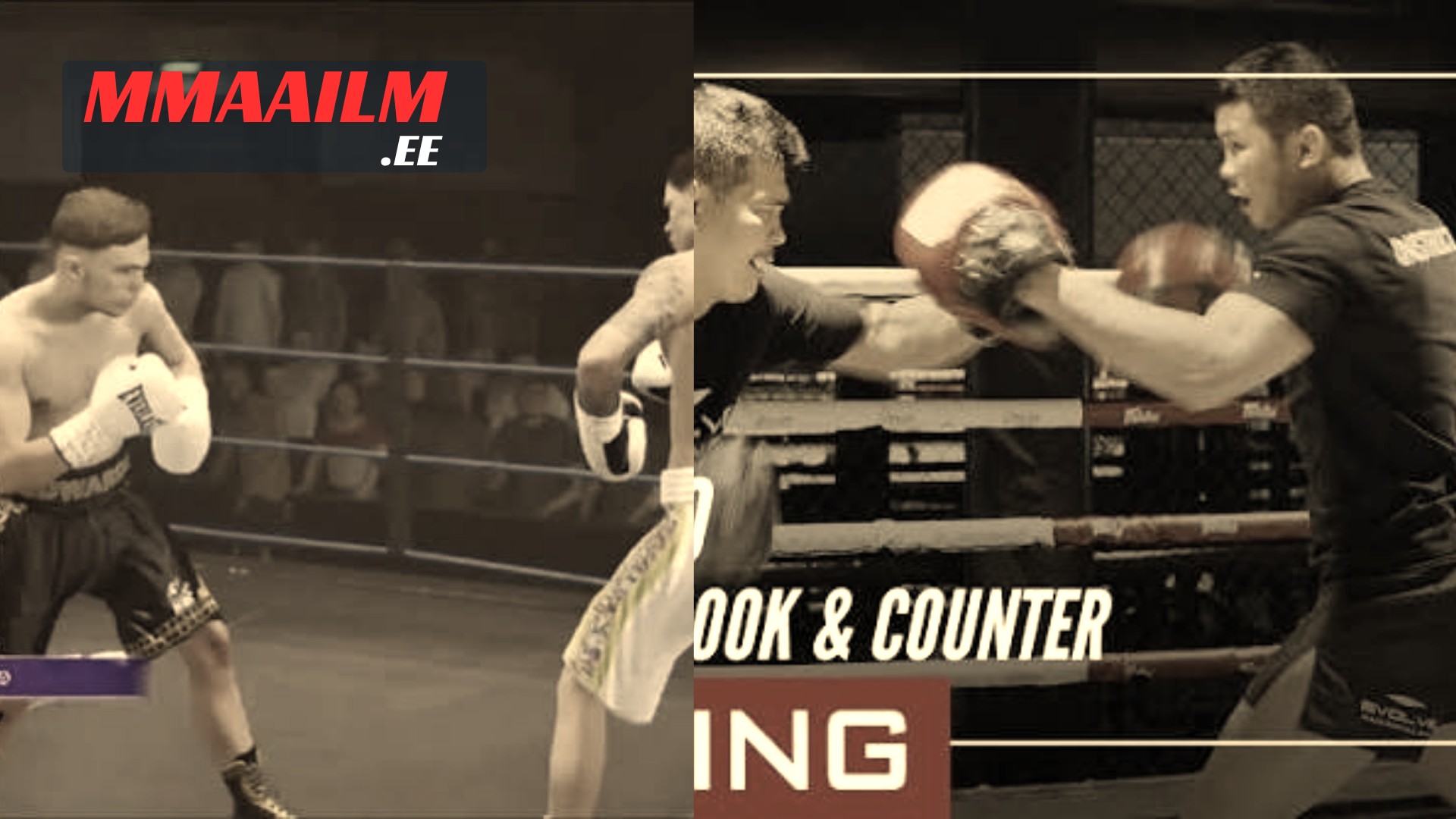
Training this technique relies heavily on specialized pad work and situational sparring. Coaches will often charge at the fighter with focus mitts, forcing the athlete to time their lead hook and pivot out of the way before a collision occurs. These drills build vital spatial awareness, teaching the fighter exactly how close an opponent needs to be before the pivot is initiated. If the fighter pivots too early, the punch falls short; if they pivot too late, they get smothered or hit.
Ultimately, mastering the check hook separates good strikers from elite tacticians. It is a punishing, elegant technique that demands perfect timing, seamless weight transfer, and supreme spatial awareness, serving as the ultimate equalizer against reckless aggression inside the cage.