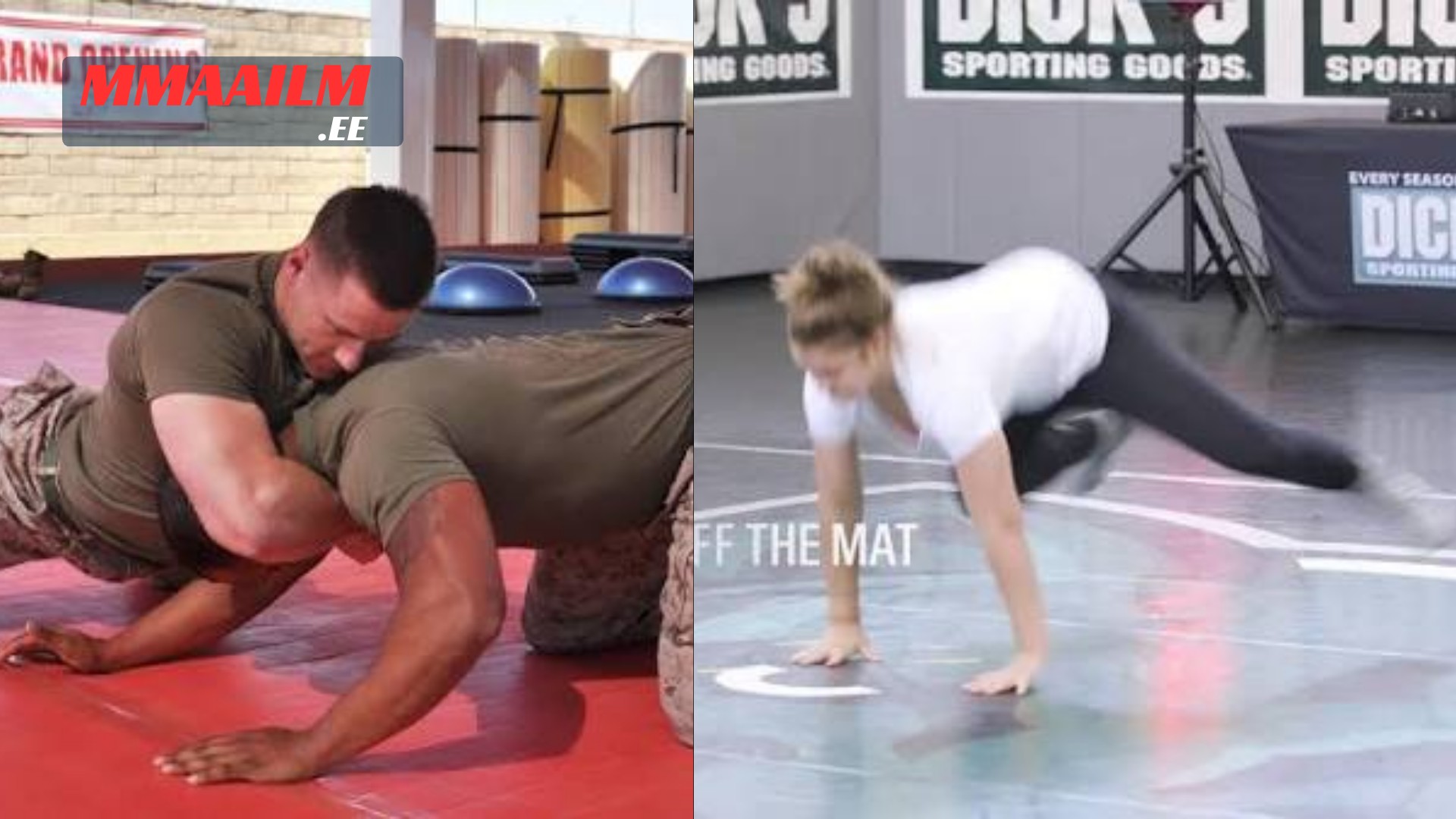
The double leg takedown is arguably the most recognizable and foundational grappling technique in mixed martial arts. When executed perfectly, it is a devastating maneuver that dictates where the fight takes place, neutralizing elite strikers and grounding evasive opponents. However, executing a double leg in the Octagon requires a vastly different approach than performing one on a traditional wrestling mat.
In MMA, the threat of strikes and submissions forces fighters to adapt their mechanics, timing, and setups. At the core of this adaptation is the concept of “level changing.” For newer fans, a level change is the act of a fighter suddenly dropping their hips and center of gravity to slip under an opponent’s line of sight and defensive guard. It is the crucial first step in transitioning from a striking exchange into a grappling sequence.
The Biomechanics of the Penetration Step
A successful double leg takedown relies heavily on the penetration step, a biomechanical movement designed to close the distance explosively while maintaining structural power. The sequence begins with the level change, dropping the hips while keeping the back straight and the chest up. Leaning forward at the waist compromises balance and eliminates the power needed to drive through the opponent.
Once the hips are lowered, the fighter steps their lead foot deeply between the opponent’s legs. The back foot then acts as a coiled spring, driving the fighter’s mass forward. As the lead knee drops toward the canvas—or hovers just above it in a modified MMA stance—the fighter wraps both arms tightly behind the opponent’s knees or lower thighs. Pulling the opponent’s legs in while simultaneously driving forward with the hips destroys the opponent’s base, forcing them to the mat.
MMA vs. Traditional Wrestling: Adjusting for Strikes and Chokes
While collegiate and freestyle wrestlers spend years perfecting the double leg, translating it directly to MMA without modification is a recipe for disaster. On a wrestling mat, an athlete does not have to worry about intercepting knees to the face or debilitating front chokes. In the cage, a poorly timed or mechanically flawed shot exposes a fighter to both.
Head positioning is the most critical adjustment a wrestler must make for MMA. In traditional wrestling, fighters are sometimes taught to drive with their head across the opponent’s torso. In MMA, leaving the neck exposed during a shot invites a tight guillotine choke. To survive the Octagon, fighters must keep their head up, eyes looking forward, and their ear glued tightly to the opponent’s ribcage or hip. This tight, upright posture seals off the space required for an opponent to wrap the neck, while also keeping the spine aligned to absorb potential impact.
The Setup: Disguising the Shot with Strikes
Shooting a “naked” takedown—diving for the legs from a distance without any setup—rarely works against high-level MMA competition. Opponents will easily read the movement, sprawl to defend, or counter with strikes. To succeed, fighters must disguise their entries by blending their striking and grappling.
The jab is one of the most effective tools for hiding a level change. By snapping a stiff jab at the opponent’s eyes, a fighter forces their target to raise their guard and shift their weight backward. As the opponent’s hands go up, the attacker’s hips go down, creating a clear path to the legs.
The overhand is another classic setup. The natural mechanics of throwing a heavy overhand require a fighter to dip their head off the center line and drop their weight. If the punch lands, it causes damage; if the opponent blocks or slips it, the attacker is already in the perfect lowered posture to seamlessly transition into a penetration step and secure the double leg.
The Blast Double vs. Traditional Finishes
Once a fighter has secured the opponent’s legs, they must choose how to finish the takedown. The traditional finish often involves “turning the corner.” After making contact, the attacker steps their trail leg up and drives their head laterally into the opponent’s side, effectively cutting an angle to dump the opponent onto their hip or back.
Conversely, the blast double relies on sheer forward momentum and explosive power. Instead of turning the corner, the attacker drives straight through the opponent’s center of gravity. The attacker runs their feet rapidly, using their forehead and shoulder to blast through the opponent’s chest or midsection while pulling the legs out from underneath them. In MMA, the blast double is highly effective for putting opponents flat on their backs in the center of the cage, though it requires impeccable timing to ensure the head is not caught in a front headlock during the collision.
Cage Wrestling: Modifying the Double Leg on the Fence
The dynamics of the double leg change entirely when the fight moves to the perimeter of the Octagon. In open space, driving an opponent backward results in a successful takedown. Against the cage, the fence acts as a third leg for the defending fighter, preventing them from falling backward and allowing them to widen their base to defend.
When an opponent is pinned against the cage, a traditional double leg drive is often ineffective. Instead, attackers must modify their finish. A common tactic is to lock the hands behind the opponent’s thighs and pull their hips laterally away from the fence, removing their structural support.
If the opponent defends the double leg heavily against the cage, fighters will frequently use the position to chain wrestle. They might transition from the double leg into a high crotch, switch to a single leg, or rise up into a body lock. By constantly shifting the angle of attack, the offensive fighter forces the defender to continuously adjust, eventually creating the leverage needed to secure the takedown and establish top control.