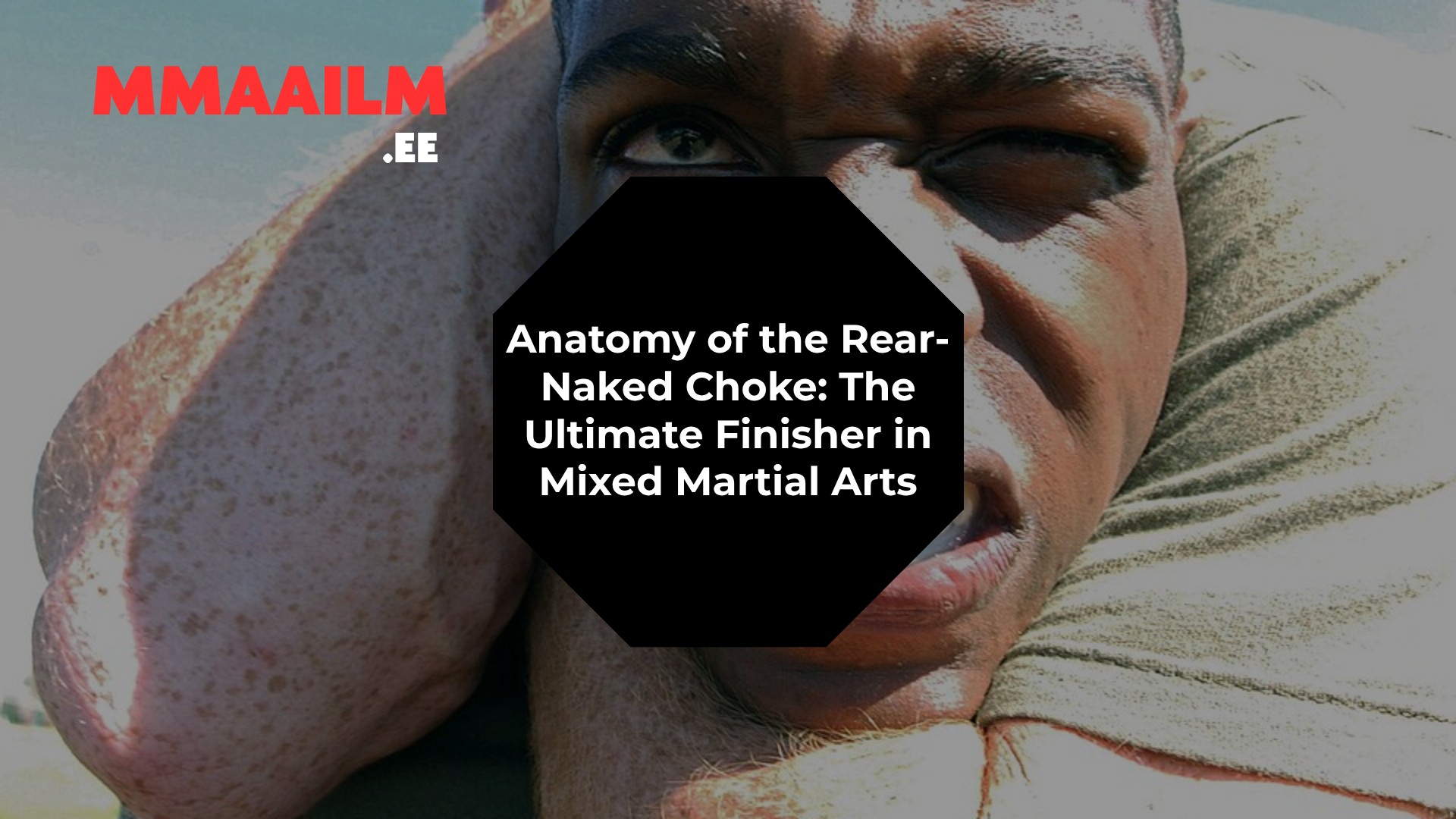
In the unpredictable and chaotic landscape of mixed martial arts, one technique stands above the rest as the ultimate equalizer: the rear-naked choke. Whether executed by a world-class Brazilian Jiu-Jitsu black belt or a dominant wrestler, this submission is the most definitive way to end a fight. Unlike strikes, which rely on cumulative damage or a perfect connection, or joint locks, which can sometimes be muscled out of, a fully locked rear-naked choke offers no escape and relies entirely on human physiology.
Understanding the anatomy of the rear-naked choke requires looking beyond the final squeeze. At the highest levels of MMA, the submission is not a single explosive movement, but a systematic, inescapable progression of positional dominance, grip fighting, and mechanical leverage.
The Statistics Behind the Ultimate Finisher
The numbers behind the rear-naked choke (RNC) highlight its unparalleled effectiveness. According to historical UFC data and combat sports databases, the RNC accounts for approximately 37% to 39% of all submission finishes in the Ultimate Fighting Championship. To put this dominance into perspective, the rear-naked choke produces more tap-outs inside the Octagon than the guillotine choke, armbar, and triangle choke combined.
This high finishing rate is largely due to the positional advantage required to attempt it. Because the attacker is positioned behind the defender, they are safe from counter-strikes and most offensive threats, allowing them to patiently work toward the finish while the defender is forced to operate entirely on survival mode.
Physiology of a Strangle: Blood Choke vs. Air Choke
A fundamental misconception about the rear-naked choke is that it works by crushing the windpipe. In reality, a properly applied RNC is a vascular restraint—commonly referred to in grappling arts as a “blood choke” or strangle.
When the technique is executed correctly, the attacker’s arm forms a V-shape around the opponent’s neck. The pressure is directed at the sides of the neck, compressing the carotid arteries and jugular veins. This restricts the flow of oxygenated blood to the brain. If both carotid arteries are compressed by approximately 50% from their baseline, cerebral hypoxia induces unconsciousness in just 7 to 10 seconds. Because the technique targets the vascular system rather than the airway, the opponent’s ability to hold their breath is completely irrelevant.
Securing the Position: Hooks and the Seatbelt Grip
Before a fighter can attack the neck, they must secure the back. The prerequisite for any high-level rear-naked choke is total back control, which prevents the opponent from turning their hips and escaping.
- Hooks: The traditional method of back control involves the attacker inserting their legs inside the opponent’s thighs. These “hooks” allow the attacker to track the opponent’s movements and flatten them out on the mat.
- The Body Triangle: In modern MMA, fighters like Charles Oliveira frequently utilize a body triangle, locking their legs entirely around the opponent’s torso. This creates an incredibly tight, energy-draining clamp that makes escaping the position notoriously difficult.
- The Seatbelt Grip: The upper body is controlled using a harness or “seatbelt” grip. One arm goes over the opponent’s shoulder (the choking arm) and the other goes under the opposite armpit (the control arm), with the hands clasped tightly at the chest.
Winning the Hand Fight: The Straitjacket System
Once the back is secured, the battle moves to the hands. A defending fighter will instinctively bring both hands to their neck to block the choking arm. To overcome this, modern submission grapplers utilize systematic hand-fighting techniques, most notably the “straitjacket system.”
Instead of trying to force the choke through the defender’s grip, the attacker uses their control arm and their own legs to systematically strip away the opponent’s defenses. By isolating one of the defender’s arms and trapping it with a leg hook, the attacker turns a two-on-two hand fight into a two-on-one advantage. Demian Maia, widely regarded as one of the greatest back-takers in MMA history, masterfully used this one-on-one wrist control to trap his opponents’ arms before effortlessly sliding his choking arm under their chin.
Sinking the Choke: The Final Mechanics
With the opponent’s defensive hands cleared, the attacker can finally sink the choke. The mechanics of the finish rely on precise alignment and leverage to maximize pressure while minimizing the energy expended.
The choking arm slides deeply across the throat until the crook of the elbow aligns with the opponent’s trachea (Adam’s apple). This alignment ensures the bony parts of the forearm and bicep press into the carotid arteries, protecting the windpipe from being crushed. The attacker then grips their own opposite bicep, slides the non-choking hand behind the opponent’s head, and expands their chest. The finishing mechanic is not just a squeeze of the arms, but a full-body contraction where the attacker pulls their elbows back and expands their torso to close the vascular pathways.
Variations and Jaw Cranks in Modern MMA
While the traditional rear-naked choke requires sliding the forearm cleanly under the chin, MMA fighters have adapted the technique for situations where the opponent stubbornly tucks their chin to their chest. In these scenarios, attackers will often lock the choke directly over the jawline.
A famous example occurred at UFC 229, when Khabib Nurmagomedov submitted Conor McGregor. When McGregor tucked his chin to defend the traditional choke, Nurmagomedov locked his grip over the jaw and applied immense squeezing pressure. This variation, often referred to as a neck crank or jaw crush, forces the submission through sheer pain and the structural compromise of the cervical spine and jaw, proving that the position is lethal even if the neck is not fully exposed.
Common Misconceptions About the Rear-Naked Choke
Despite its popularity, several myths still surround the rear-naked choke in popular culture and casual MMA fandom.
- The Meaning of “Naked”: The term does not refer to skin-to-skin contact or a lack of gloves. It translates from the traditional Judo term hadaka-jime, signifying that the technique is applied using only the practitioner’s anatomical grips, without relying on a uniform or gi lapel. In Brazilian Jiu-Jitsu, the technique is famously known as Mata Leão, or the “Lion Killer.”
- Powering Out: Novice observers often wonder why a strong fighter doesn’t simply pull the attacker’s arms apart. Once the choke is fully locked and the bicep grip is secured, strength becomes entirely irrelevant. The mechanical leverage of the position makes the grip unbreakable, and the resulting cerebral hypoxia is an involuntary physiological response. Even the strongest heavyweight will lose consciousness within seconds if they do not tap.