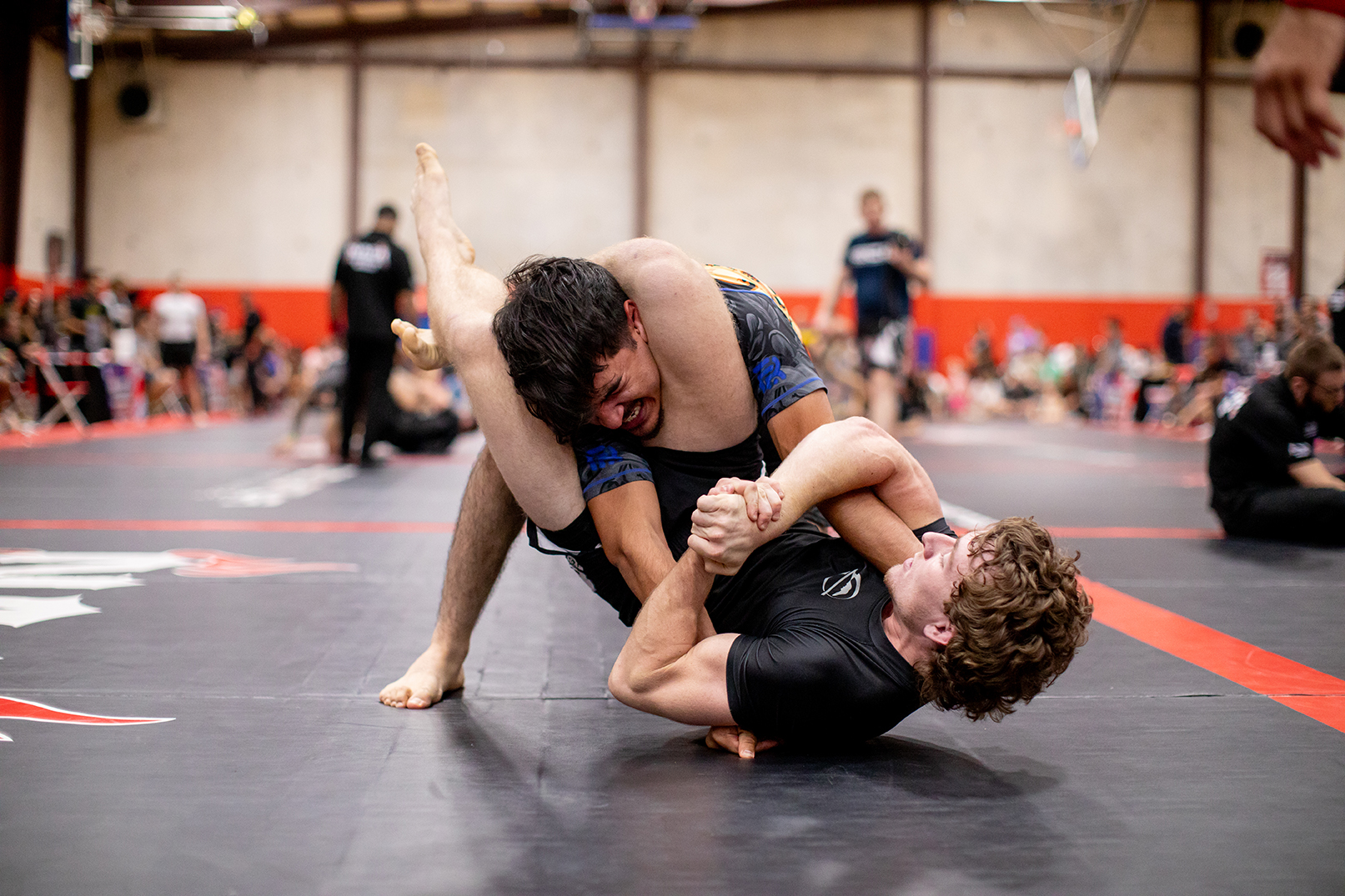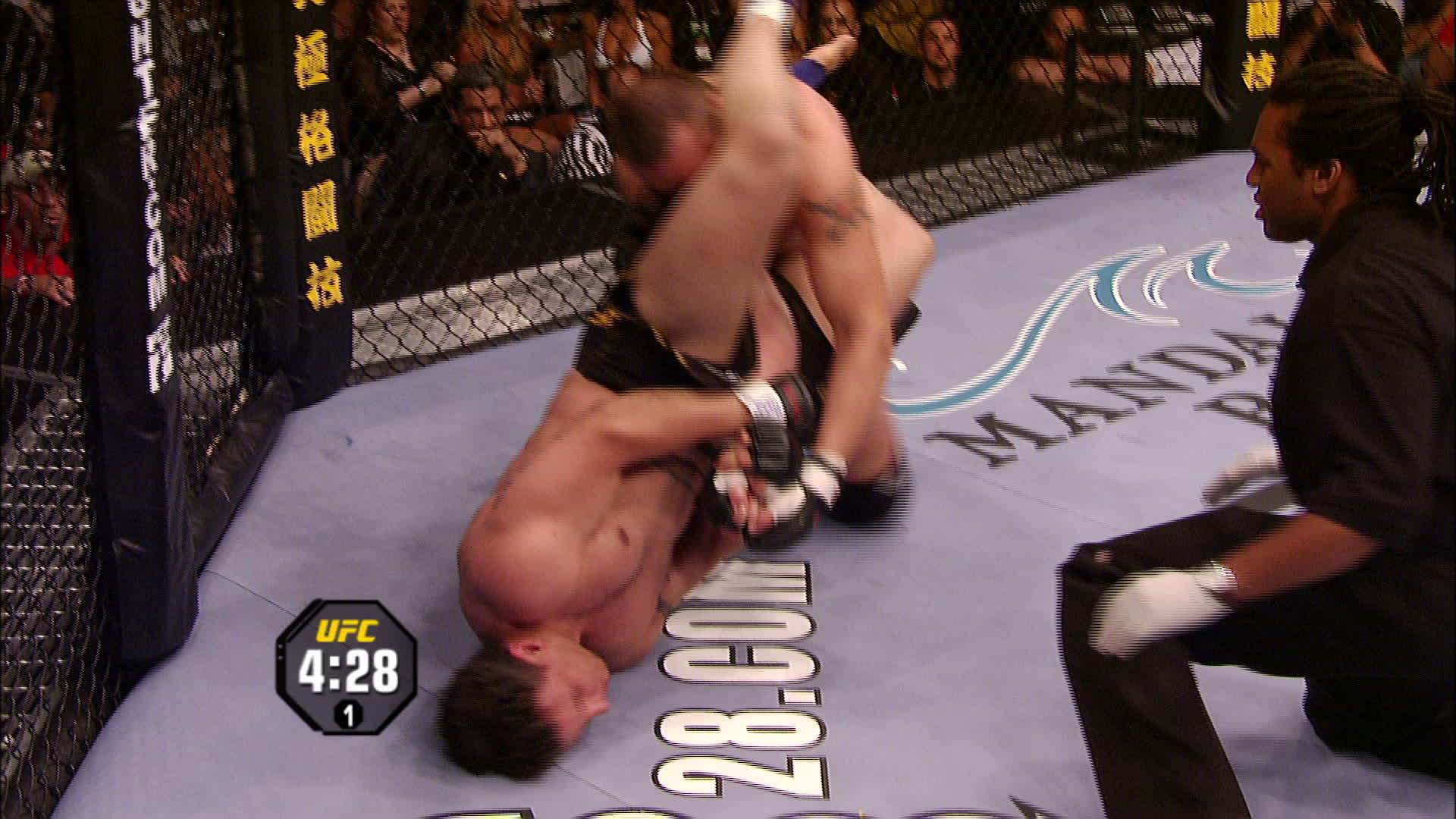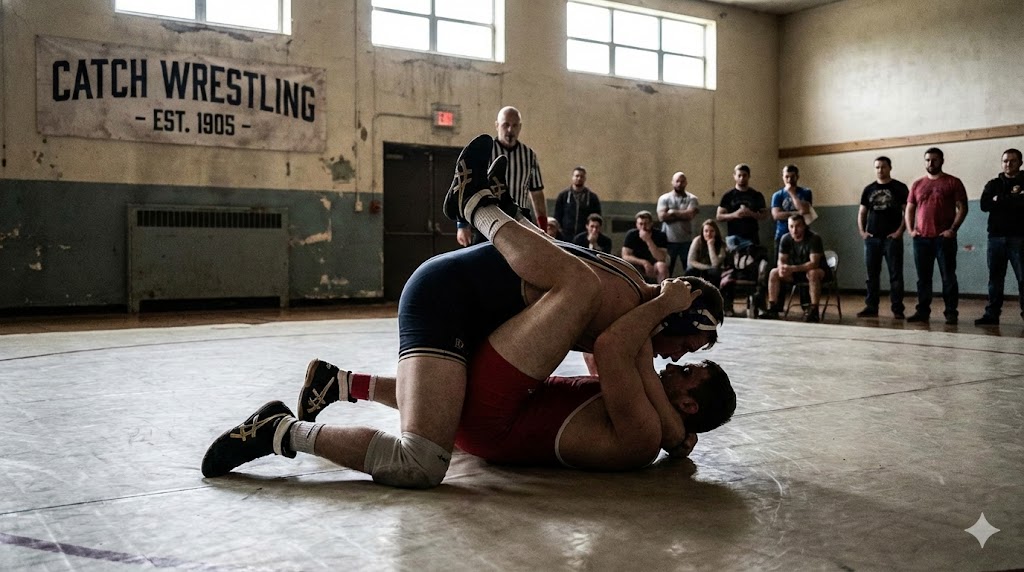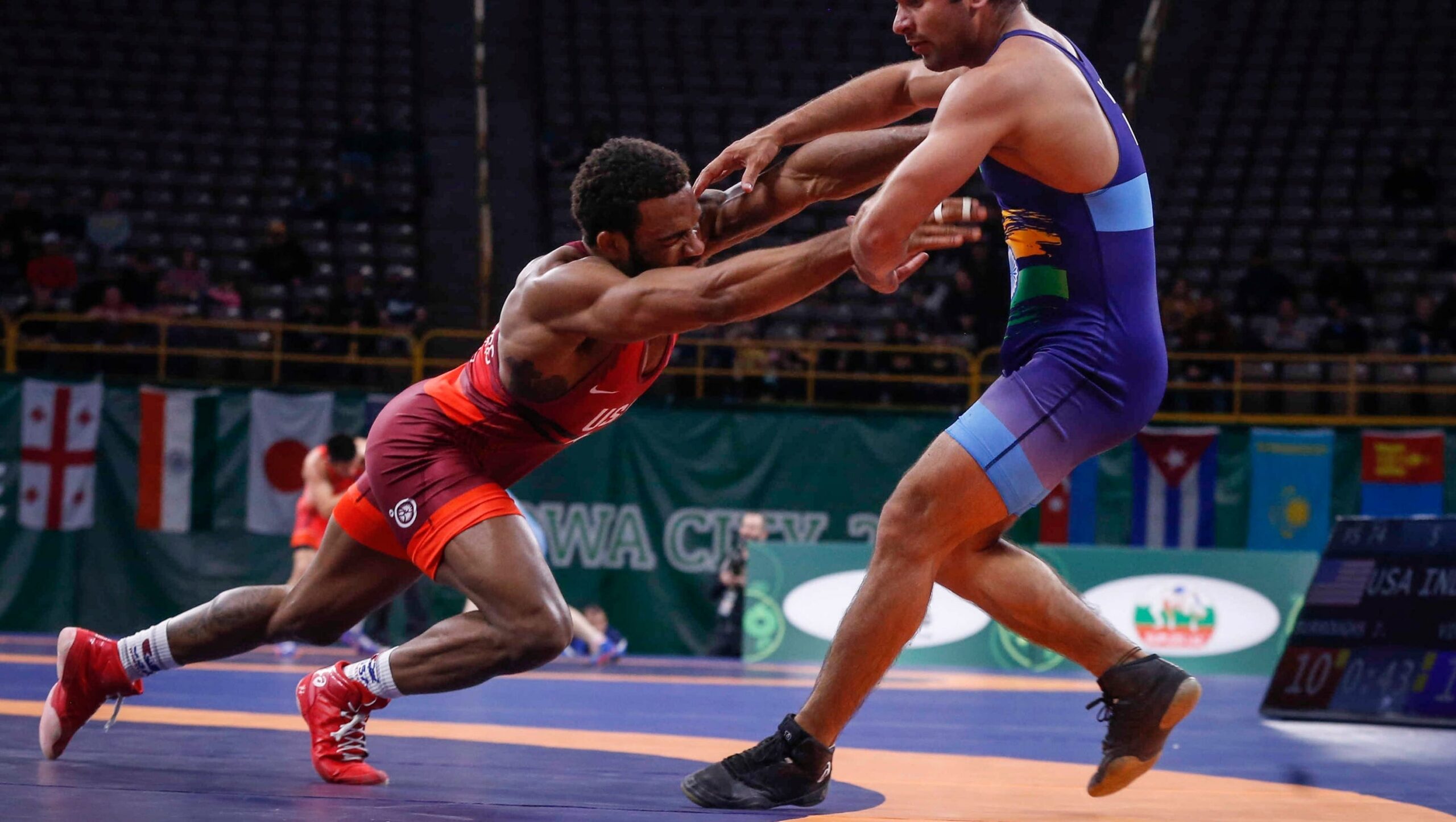
When you watch a highlight reel of mixed martial arts, the knockouts usually get the glory. But if you look closely at the most dominant champions in history, you often find them controlling the fight from inches away, pressing their opponents against the cage, and launching them through the air with terrifying amplitude. This is the domain of Greco-Roman wrestling.
While Freestyle wrestling is often cited as the best base for MMA due to its focus on leg attacks (like the double-leg takedown), Greco-Roman is the sport’s violent, upright cousin. It is a style that forbids grabbing the legs, forcing competitors to rely entirely on upper-body strength, leverage, and the clinch. In the Octagon, this restriction transforms into a specific set of superpowers: unbreakable body locks, devastating slams, and the ability to dictate where the fight takes place.
From the legendary Randy Couture to modern powerhouses, Greco-Roman has shaped the strategy of cage fighting in ways that are often overlooked. This deep dive explores the mechanics of Greco-Roman wrestling, why it differs from Freestyle, and how its practitioners turn the cage into a weapon.
Greco-Roman vs. Freestyle: The Critical Differences
To understand why Greco-Roman is unique, you must understand what is missing. In Freestyle wrestling and American Folkstyle (collegiate) wrestling, the legs are fair game. Attackers shoot for single-legs and double-legs; defenders sprawl and grab ankles. This creates a low, crouched stance.
Greco-Roman wrestling, an Olympic discipline since 1896, strictly prohibits holds below the waist. You cannot trip, you cannot hook the leg, and you absolutely cannot grab the legs with your hands. This rule set creates a distinct physical evolution:
- Upright Posture: Because they don’t need to defend their legs, Greco wrestlers stand tall, hips in, chest-to-chest.
- Clinch Mastery: The entire sport revolves around winning the battle for underhooks, overhooks, and head position.
- High-Amplitude Throws: Without leg trips to bring an opponent down, Greco wrestlers must use suplexes, hip tosses, and body locks to slam opponents to the mat.
In Wrestling in MMA, Freestyle is generally more common because the ability to shoot from a distance is a safer way to close the gap. However, once the distance is closed, the Greco-Roman specialist becomes a nightmare.
The “Dirty Boxing” Revolution
Pure Greco-Roman wrestling has a major flaw in MMA: if you stand upright to clinch, you are vulnerable to leg kicks and double-leg takedowns. However, one man solved this puzzle and changed the sport forever: Randy Couture.
Couture, a multi-time Olympic alternate in Greco-Roman, realized that the MMA cage (the fence) could act as a third partner. He didn’t need to shoot from the outside. He used his boxing to close the distance, pinned his opponents against the cage, and then applied his Greco skills.
This birthed the strategy known as “Dirty Boxing.” By securing an underhook or a collar tie (a staple of the Greco clinch), Couture could control his opponent’s posture with one hand while landing uppercuts and hooks with the other. The Greco clinch allows a fighter to lean their weight on an opponent, exhausting them while landing damage, a tactic detailed in our guide to MMA Clinch and Cage Wrestling.
The Suplex: High Risk, High Reward
There is no sight more spectacular in MMA than a perfect suplex. This technique, the hallmark of Greco-Roman scoring, involves locking hands around an opponent’s waist (body lock) and arching backward to throw them over your head.
In MMA, this is not just about scoring points; it is about psychological warfare and physical damage. A high-amplitude slam knocks the wind out of a fighter and can disorient them instantly, setting up a TKO or submission. While risky—if you slip, you give up your back—fighters with a Greco background like Dan Henderson and Jon Jones have utilized these upper-body throws to demoralize opponents.
For a deeper look at how these impacts affect a fight, read about MMA Fight Outcomes.
Legends of the Greco Clinch
While rarer than their Freestyle counterparts, Greco-Roman practitioners have etched their names into history by adapting their “limiting” art into a cage-fighting system.
Randy Couture
The “Natural” is the godfather of Greco in MMA. He used his clinch game to neutralize devastating strikers like Chuck Liddell and Vitor Belfort. His ability to grind opponents against the fence is the blueprint for modern cage control. Learn more about his legacy in our profile: Randy Couture MMA Legacy.
Dan Henderson
A two-time Olympian in Greco-Roman wrestling, “Hendo” used his clinch threat to set up one of the most feared weapons in history: the H-Bomb (overhand right). Opponents were so worried about being clinched and thrown that they dropped their hands, leaving them open to his knockout power.
Mark O. Madsen
A silver medalist at the 2016 Rio Olympics, Denmark’s Madsen entered the UFC late in his career but showcased the pure power of the discipline. His ability to seemingly ragdoll lightweight opponents showed that even in the modern era, high-level Greco is a viable base.
Jon Jones
While his base is JUCO (Folkstyle) wrestling, Jon Jones effectively utilizes Greco-Roman techniques in the clinch better than almost anyone. His use of overhooks to torque opponents’ shoulders and his spinning elbows from the clinch are direct applications of upper-body dominance.
Why Greco is Rarer Than Freestyle
If Greco is so effective, why are there fewer Greco-based champions than Freestyle ones? The answer lies in the transition period.
Greco-Roman wrestlers spend their entire careers never worrying about someone grabbing their legs. In MMA, the leg kick and the double-leg takedown are constant threats. A Greco wrestler must completely relearn their stance to protect their lower body. Freestyle wrestlers, who are used to defending their legs, often have a smoother transition to the defensive grappling required in MMA.
However, once a Greco wrestler learns to “sprawl and brawl,” their upper-body strength often surpasses that of their peers. They become immovable objects in the clinch, capable of winning rounds simply by pinning opponents to the cage wall.
Conclusion: The Underrated Art
Greco-Roman wrestling may not be the most common base for mixed martial arts, but it provides a specific set of tools—clinch control, dirty boxing, and high-impact throws—that are devastating in the cage. As MMA evolves, the ability to control an opponent against the fence is becoming more valuable than ever, ensuring that the ancient art of the upper-body clinch remains a staple of modern combat.
FAQ
Is Greco-Roman wrestling better than Freestyle for MMA?
Neither is strictly “better,” but they serve different purposes. Freestyle is generally better for shooting takedowns from a distance and defending leg attacks. Greco-Roman is superior for clinch fighting, controlling opponents against the cage, and executing upper-body throws.
Why don’t Greco wrestlers grab legs?
It is against the rules of Greco-Roman wrestling. The sport was designed to emphasize upper-body strength and throws. In MMA, Greco wrestlers are allowed to grab legs, but they often stick to upper-body techniques because that is where they have decades of muscle memory.
Can you use a suplex in MMA?
Yes, the suplex is a legal and effective technique in MMA. However, fighters must be careful not to spike their opponent directly on the top of their head, which can be illegal depending on the specific arc of the throw. A proper suplex lands the opponent on their upper back or shoulders.
Who is the best Greco-Roman wrestler in UFC history?
Randy Couture is widely considered the most successful Greco-Roman wrestler in UFC history due to his multiple titles and adaptation of the style into “Dirty Boxing.” Dan Henderson and Matt Lindland are also top contenders for this distinction.