When the final horn sounded at the T-Mobile Arena for the main event of UFC 326, there was no blood on the canvas. There were no broken noses, no last-second knockdowns, and perhaps most damning of all for a BMF Title fight, there was barely a scratch on either fighter’s face. Instead, there was a smattering of restless boos from the Las Vegas crowd and a stat sheet that read like a grappling seminar.
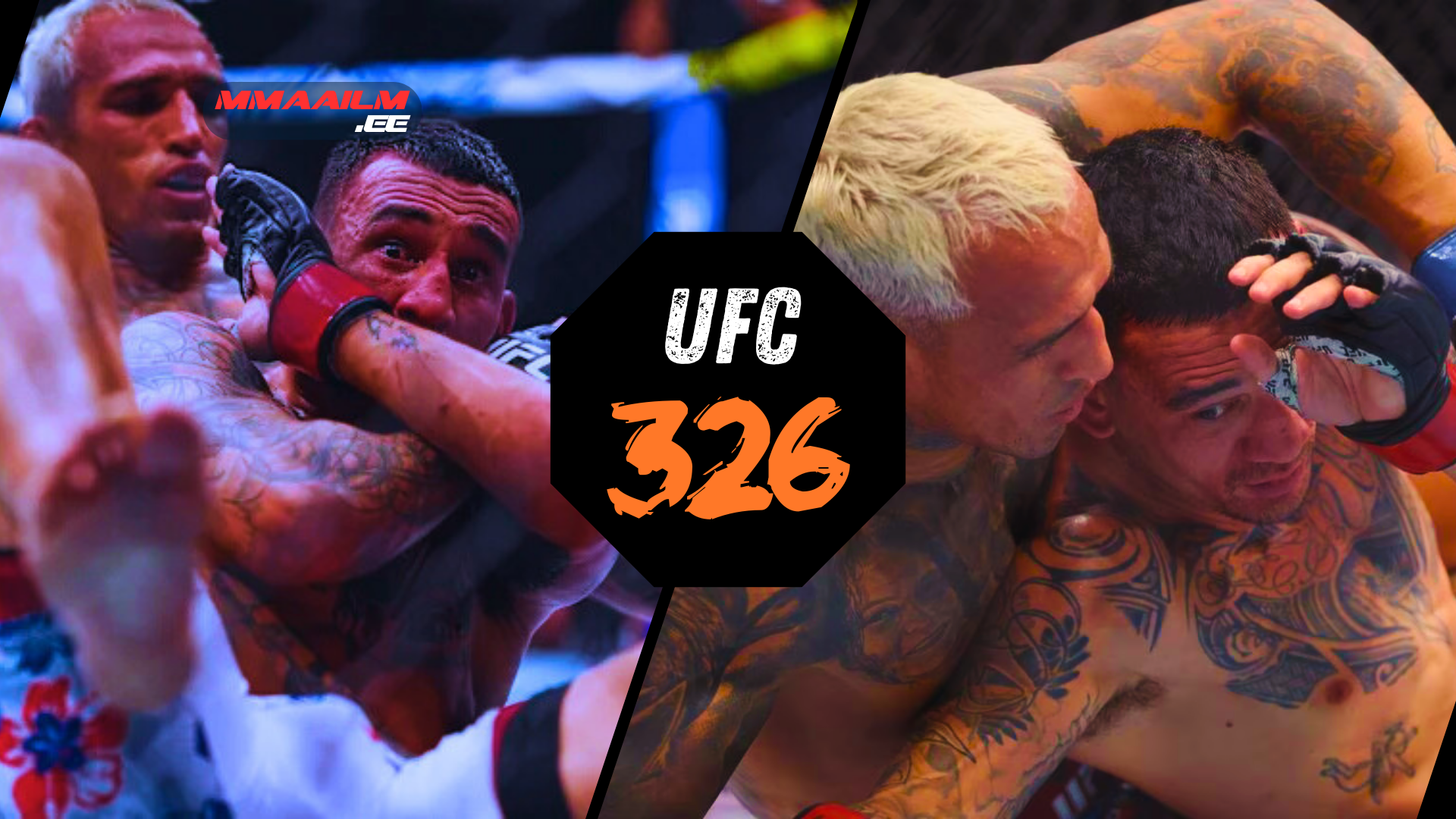
Charles Oliveira had just defeated Max Holloway via a dominant, unanimous decision (50-45 x3). By every metric of professional mixed martial arts, it was a masterclass. Oliveira, the former lightweight king, neutralized one of the best boxers in UFC history by grounding him, controlling his wrists, and safely navigating twenty-five minutes of action without taking a single significant risk. He fought the perfect fight.
And that is exactly why the BMF Title is now officially in an identity crisis. The belt, forged in the chaotic fires of Nate Diaz and Jorge Masvidal’s street-fighter ethos, was never designed for “perfect fights.” It was designed for chaotic wars. By winning the BMF belt with a safe, tactical wrestling clinic, Oliveira didn’t just beat Max Holloway—he broke the unwritten covenant of the title itself.
The BMF Covenant: Violence Above Victory
To understand why UFC 326 felt like a betrayal of the belt’s lineage, we have to look back at why it exists. The BMF Championship was not created by matchmakers looking for a number one contender. It was willed into existence by Nate Diaz at UFC 241, who declared himself the “Baddest Motherf***er” in the game because he fought to finish, regardless of the scorecard.
The lineage that followed honored that code:
- Jorge Masvidal: Won it by battering Diaz until a doctor stopped the carnage.
- Justin Gaethje: Won it by decapitating Dustin Poirier with a head kick at UFC 291.
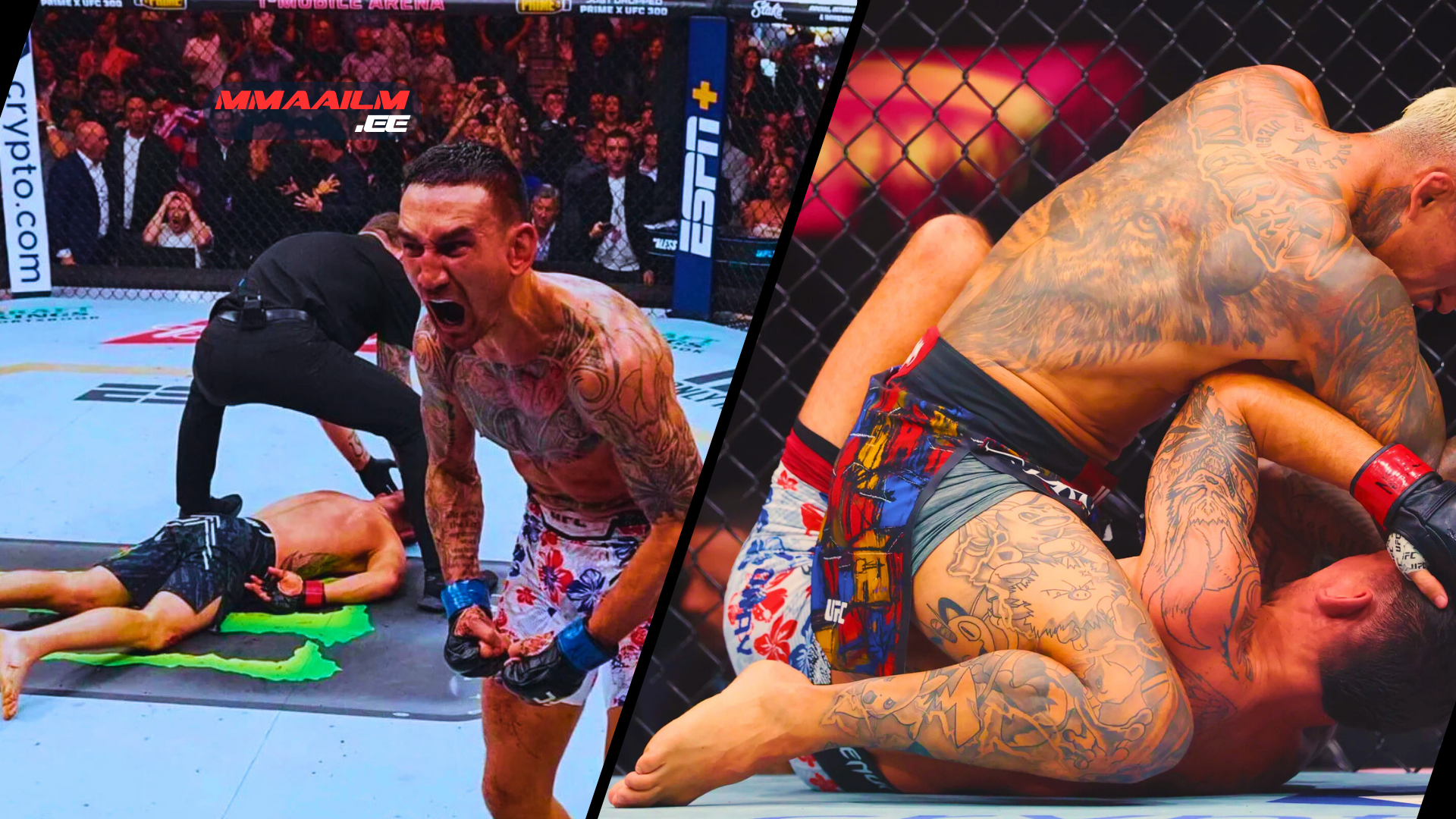
- Max Holloway: Won it by pointing to the floor in the final 10 seconds against Gaethje at UFC 300, risking a secure victory for the chance of a legendary knockout.
This belt was the anti-thesis to point-fighting. It was supposed to be the prize for the fighters who would rather lose consciousness than lose a round by stalling. It was the “Swang and Bang” contract made physical.
UFC 326 Breakdown: The “Smartest” Mother F***er?
Enter Charles “Do Bronx” Oliveira. No one questions his lethality; holding the record for most finishes in UFC history proves he is a killer. However, at UFC 326, we saw a different version of Oliveira—one who was acutely aware of the risks of trading with Max Holloway.
Instead of the Muay Thai pressure and flying knees we expected, Oliveira executed a gameplan rooted in safety. The stats tell the story of the “crime”:
- Control Time: 20:49 (nearly 85% of the fight).
- Takedowns: 5 of 7 completed.
- Significant Strikes Absorbed: Less than 20.
Oliveira utilized heavy top pressure and cage wrestling to keep Holloway flat on his back. Whenever Holloway attempted to explode up or create a scramble, Oliveira clamped down, prioritizing position over submission. It was high-level Brazilian Jiu-Jitsu, but it was executed with the mindset of a points fighter protecting a lead.
When Holloway pointed to the ground in the final ten seconds—a tradition he started—Oliveira didn’t bite. He shot a double leg. Smart? Absolutely. BMF? Absolutely not.
Why “Do Bronx” Broke the Code
The criticism isn’t that Oliveira wrestled. Wrestling is a massive part of MMA, and ground and pound finishes are some of the most violent spectacles in the sport. The criticism is that he wrestled to stall the danger.
In the lead-up to the fight, many analysts predicted Oliveira would use his grappling to find a quick submission—a rear-naked choke or an armbar that snaps limbs. That fits the BMF mold, somewhat. But what we got was “lay and pray” disguised as high-level guard passing. He removed the element of danger from the fight.
The BMF title is unique because it is subjective. You can be the Undisputed Champion by winning a boring decision (think Georges St-Pierre vs. Dan Hardy), and nobody complains because the goal is to be the best. But to be the baddest, you have to be willing to enter the fire. Oliveira brought a fire extinguisher.
The Identity Crisis of the Silver Belt
With this victory, the BMF title is now effectively just another interim belt or a “Number One Contender” trophy. If the criteria for winning it is simply “winning the fight,” then it is redundant. The undisputed UFC Lightweight Championship already exists to tell us who the best fighter is.
If the UFC wants to save the identity of this belt, they have a difficult decision to make. Do they accept that MMA has evolved to a point where even the “brawlers” are too smart to brawl? Or do they strip the title when the performance doesn’t match the promise?
Charles Oliveira is one of the greatest lightweights of all time. His resume is legendary. But as he walked out of T-Mobile Arena with the silver belt over his shoulder, it felt less like a coronation of violence and more like a hostile corporate takeover. He didn’t win the BMF belt; he stole it on a technicality.
Frequently Asked Questions (FAQ)
What does the BMF Title stand for?
BMF stands for “Baddest Motherf***er.” It is a symbolic title created by the UFC to honor fighters known for their aggressive styles, durability, and willingness to finish fights rather than win by points. It was first contested at UFC 244 between Jorge Masvidal and Nate Diaz.
Is the BMF belt an official UFC championship?
No, the BMF belt is not an official divisional championship. It does not carry the same weight as the Undisputed or Interim titles regarding pay-per-view points or automatic ranking advancements. It is considered a “celebratory” title, though it is highly coveted for the legacy and media attention it brings.
Why was Charles Oliveira’s win at UFC 326 considered controversial?
While the decision victory was clear (50-45 on all scorecards), the performance was controversial because it relied heavily on safe wrestling and control time. Fans and pundits argued that this cautious style contradicted the “spirit” of the BMF title, which is historically associated with high-risk striking and violent finishes.
Who has held the BMF belt in UFC history?
As of March 2026, the belt has been held by Jorge Masvidal (inaugural champion), Justin Gaethje, Max Holloway, and now Charles Oliveira.
Can a grappler be a BMF champion?
Yes, absolutely. The critique of Oliveira was not that he grappled, but how he grappled. A BMF grappler is typically expected to aggressively hunt for submissions or inflict damage with ground and pound, rather than simply holding position to run out the clock.