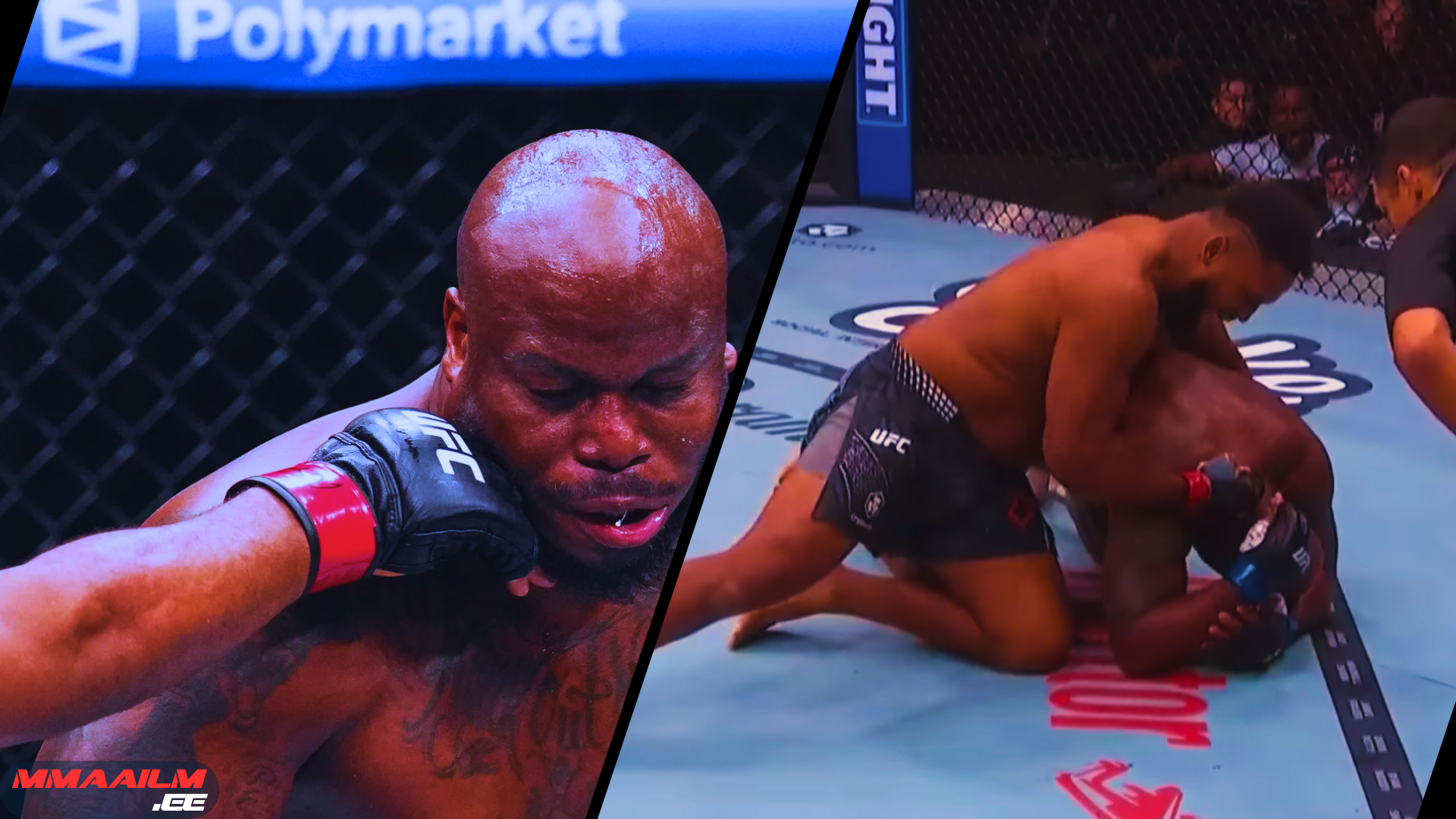
The heavyweight division is a land of giants where one punch changes everything, but at UFC 324, the narrative shifted from sudden violence to a changing of the guard. Derrick Lewis, the UFC’s all-time knockout king, suffered a devastating second-round TKO loss to rising contender Waldo Cortes-Acosta. For fans in Estonia and across the globe, the result wasn’t just another fight night statistic—it was a somber signal that the era of “The Black Beast” might finally be drawing to a close.
In a sport defined by youth and evolution, Lewis has defied the odds for over a decade. But at 40 years old, facing a younger, faster, and more durable opponent, the limitations of his legendary power were laid bare. This wasn’t a lucky punch; it was a calculated dismantling by a fighter ready to take his spot in the rankings.
The Fight That Changed the Heavyweight Landscape
Entering UFC 324, the stakes were deceptively high. Lewis had openly discussed his desire for one last title run in 2026, even joking about fighting for the belt at the White House. Waldo Cortes-Acosta, meanwhile, was fighting for respect. Often criticized for a lack of finishing instinct in his early UFC run, “Salsa Boy” entered this bout on a hot streak, having secured back-to-back finishes.
Round 1: The Warning Signs
The opening round was a tense, low-output affair that favored the more technical striker. Unlike the chaotic brawls Lewis thrives in, Cortes-Acosta kept the fight at a disciplined range. He utilized a sharp jab and leg kicks to pick apart the stationary target. Lewis, looking to land that one “H-Bomb,” found himself swinging at air or hitting gloves. It was a classic case of a matador teasing the bull, draining Lewis’s gas tank without taking significant damage.
Round 2: The End of the Road?
The finish came at 3:14 of the second round. After a missed overhand right from Lewis—a punch that has slept countless victims before—Cortes-Acosta countered with a precise right hand of his own. The connection was clean, and Lewis’s equilibrium betrayed him. He slipped, and Cortes-Acosta didn’t hesitate, swarming with ground-and-pound until referee Jason Herzog stepped in.
There was no controversial stoppage. There was no “early” call. Lewis was beaten decisively.
Derrick Lewis: The “Gatekeeper” Reality
For years, Derrick Lewis has been the ultimate litmus test for heavyweight contenders. Beat him, and you’re ready for the top 5. Lose, and you’re just another highlight reel. But this loss feels different. It marks a transition from “dangerous contender” to “aging veteran.”
- Age Factor: At 40, reaction times slow down. The counter-shot that dropped Lewis is a punch he might have eaten or slipped five years ago.
- The “Win or Bust” Style: Lewis has always relied on his chin and power. When the chin fades or the speed advantage widens, that style becomes a liability.
- Rankings Slide: Entering the fight at #8, this loss will likely push him outside the top 10, a territory he hasn’t occupied in years.
UFC CEO Dana White summed it up best in the post-fight presser: “You can’t knock everybody out. It’s not how the game works.” It was a respectful but telling acknowledgment that the magic might be running out.
Waldo Cortes-Acosta: A New Contender Arrives
While the headlines focus on Lewis’s potential retirement, the story should also be about Waldo Cortes-Acosta. The Dominican fighter improved his record to 17-2 and silenced critics who labeled him a “decision machine.” By becoming one of the few men to finish Lewis with strikes, he has legitimized his place in the title conversation.
His post-fight callout was ambitious: Curtis Blaydes. It’s a smart move. Blaydes is a top-ranked grappler who would test Cortes-Acosta’s takedown defense, a crucial box to check if he wants to challenge champions like Tom Aspinall or Ciryl Gane.
Is It Time to Retire?
This is the question on every fan’s mind. Lewis has teased retirement before, most notably in 2017 after a loss to Mark Hunt, only to return and fight for the title twice more. However, the heavyweight division in 2026 is faster and more well-rounded than ever before.
If Lewis continues, he risks becoming a stepping stone for the next generation—a name to build a résumé on rather than a legitimate threat. However, his popularity is undeniable. He is one of the few fighters who doesn’t need a belt to sell out an arena. A “fun fight” retirement tour against fellow veterans (perhaps a rematch with Jairzinho Rozenstruik or a bout with a fading Tai Tuivasa) could be a graceful exit strategy.
For the latest updates on fighter rankings and fight announcements, keep an eye on mmaailm.ee.
The Technical Breakdown: Why Lewis Lost
Let’s look at the stats that tell the story of the Derrick Lewis loss.
- Volume vs. Power: Cortes-Acosta out-landed Lewis significantly in the first round, forcing Lewis to be reactive rather than proactive.
- Footwork: Lewis has notoriously flat feet. Cortes-Acosta used lateral movement to stay off the centerline, neutralizing Lewis’s straight right hand.
- Cardio Management: Lewis expended huge energy on missed haymakers. Cortes-Acosta fought economically, preserving his power for the second-round finish.
This fight was a reminder that in modern MMA, even at heavyweight, athleticism and game planning often defeat raw power.
What’s Next for the Heavyweight Division?
With UFC 324 in the books, the heavyweight picture is shifting. The old guard—Stipe Miocic (retired), Jon Jones (inactive/champion status complex)—is fading. New names are needed.
Waldo Cortes-Acosta has proven he belongs. For Derrick Lewis, the path forward is murky. If he chooses to fight on, he will likely face unranked prospects looking to make a name for themselves. It is a dangerous and often thankless position.
For more deep dives into fight strategies and fighter profiles.
FAQ: Derrick Lewis and Heavyweight MMA
1. Has Derrick Lewis officially retired after UFC 324?
No, as of the immediate post-fight press conference, Derrick Lewis has not officially announced his retirement. However, at 40 years old and coming off a stoppage loss, speculation is high.
2. What is Derrick Lewis’s UFC record for knockouts?
Derrick Lewis holds the record for the most knockout wins in UFC history with 16. This record makes him a future Hall of Famer regardless of his recent losses.
3. Who is Waldo Cortes-Acosta?
Waldo Cortes-Acosta is a Dominican heavyweight fighter with a background in baseball (pitcher) and boxing. He entered the UFC through Dana White’s Contender Series and has a professional record of 17-2.
4. Is heavyweight MMA dangerous for older fighters?
Yes. The heavyweight division carries the highest risk of brain trauma due to the sheer force of punches. Reflexes and chin durability tend to decline with age, making it dangerous for fighters over 40 to compete against prime athletes.
5. Where can I watch UFC events in Estonia?
UFC events are typically broadcast via streaming platforms like Viaplay or UFC Fight Pass. Check local listings on mmaailm.ee for specific broadcast details for upcoming cards.